Lawn Care Prices in Cincinnati (2026)
Cincinnati prices lawn care a notch below the national average — the Ohio River valley's low cost of living sees to that — but the market has its own shape: fescue lawns stressed by humid summers, clay soils that sell aeration every fall, and west-side hills that quietly convert below-average base prices into mid-band quotes. Here is what the metro actually charges.
By the MowMath editorial team · Updated $1
Key numbers at a glance
| Service | Typical Cincinnati range | What drives it |
|---|---|---|
| Mowing, typical lawn (weekly) | $30–$50 / visit | Below national band; biweekly adds 15–25% |
| Mowing, 1/2 acre and larger | $60–$130 / visit | Common in Anderson Township, Mason, West Chester |
| Aeration | $70–$180 | Clay soils; fall window books out early |
| Fall leaf cleanup | $125–$400 | Maple, oak and sweetgum; two-visit packages standard |
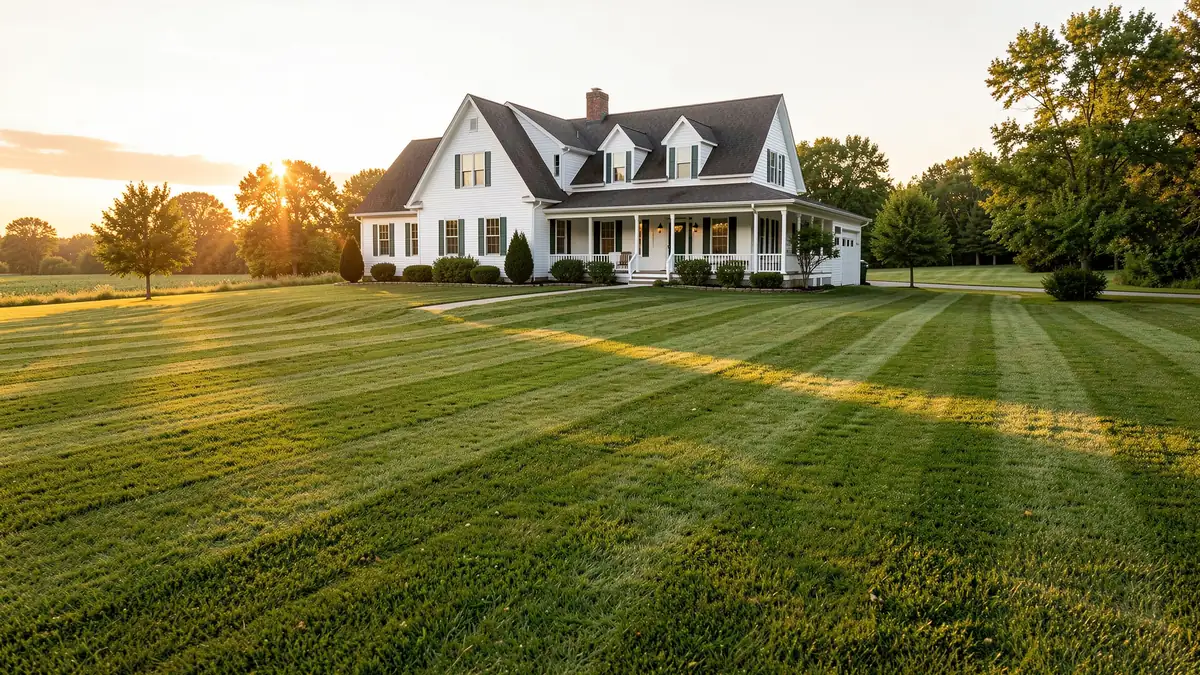
Lawn care prices in Cincinnati: the ranges
These bands start from national benchmarks — $35–$60 per mow for a typical 5,000–10,000 sq ft lawn — and shift them downward for the Cincinnati metro, which prices roughly 10–15% below national on comparable work. Treat each figure as a typical quoted range: lot size, slope, tree cover and frequency move real quotes around inside each band.
| Service | Typical Cincinnati range | What drives it |
|---|---|---|
| Mowing, typical lawn (weekly) | $30–$50 / visit | Below national band; biweekly adds 15–25% |
| Mowing, 1/2 acre and larger | $60–$130 / visit | Common in Anderson Township, Mason, West Chester |
| Aeration | $70–$180 | Clay soils; fall window books out early |
| Fall leaf cleanup | $125–$400 | Maple, oak and sweetgum; two-visit packages standard |
| Pressure washing, driveway | $130–$275 | Concrete at roughly $0.15–$0.30 per sq ft |
| Pressure washing, house soft wash | $200–$475 | Siding at roughly $0.30–$0.60 per sq ft |
The minimum charge that gets a truck out typically runs $30–$45, under the national floor, and Cincinnati's older housing stock uses it constantly — a Price Hill or Westwood lot and a Norwood double-lot can both be quick minimum-rate stops on a dense route. The big-lot economics live in Anderson Township, Mason, West Chester and the northern suburbs, where half-acre-plus yards run on per-square-foot math. Hilly west-side terrain works like a standing difficulty modifier: slopes and narrow access push flat-lot quotes up the standard +10–25%.
What moves prices in Cincinnati
A long transition-zone season. Mowing typically runs early April through late October, roughly 27–29 weeks — earlier and longer than Cleveland or Detroit because the river valley warms fast. Fescue is growing hard by mid-April, surges through May, and slows only in the hottest humid weeks before a strong cool fall stretch. The annual math is genuinely different from Ohio's northern metros: more billable weeks per lawn at a lower per-visit rate, which is how a below-average band still supports full-time routes.
Fescue, bluegrass and the humidity tax. Cincinnati sits at the transition zone's southern edge: tall fescue and Kentucky bluegrass are the standard lawn grasses, with some Zoysia on sunny southern exposures, per Ohio State University Extension's lawn and garden resources. The Ohio River valley's humid summers levy a real tax on fescue — brown patch and heat stress thin lawns every July and August — which is why fall aeration plus overseeding (typically $70–$180 for the aeration, seed priced on top) is close to a religious observance here. The aeration and overseeding pricing guide covers the per-square-foot math; the practical market fact is that late-August-to-early-October is the most requested window of the Cincinnati year, and it books out in summer.
Clay, hills and the fall finish. Southwest Ohio's clay soils compact hard, keeping aeration in demand on top of the disease-repair cycle. The west side's hills add the terrain modifier — slopes become walk-behind and trimmer work, exactly as in Pittsburgh, just less extreme. And the maple-oak-sweetgum canopy produces a real leaf season from late October into early December, typically $125–$400 in two-visit packages. Most established operators also plow snow, though Cincinnati winters are lighter than Cleveland's; wage expectations track the region, and the Bureau of Labor Statistics grounds maintenance occupational page is the right cross-check.
Mowing price ladder in Cincinnati
| Lot size | Typical per visit |
|---|---|
| Under 5,000 sq ft | $28–$40 |
| 5,000–10,000 sq ft | $30–$50 |
| 10,000–20,000 sq ft | $50–$80 |
| 1/2 acre (≈21,800 sq ft) | $70–$105 |
| 1 acre and up | $100–$150 |
Sloped lots in the western hills and along the river valleys quote a row higher than the flat version of the same size. Fenced rear yards with narrow gates, mature shade that slows drying after rain, and sweetgum seed pods by the million are the local difficulty details worth pricing into the visit.
Questions Cincinnati customers actually ask
Why does my fescue thin out every summer? Humidity plus heat plus brown patch — the valley's signature lawn problem. The repair cycle is fall aeration and overseeding, not summer watering; the seasonal logic is laid out in the 2026 pricing guide. Book the fall window by August, because everyone's lawn needs the same thing at the same time.
Weekly or biweekly? Weekly through the April-June surge is the honest answer; biweekly in that stretch carries the standard +15–25% upcharge and still produces a shaggy cut. Many Cincinnati customers run weekly in spring, drop to biweekly in the August slump, and return to weekly for the fall stretch — a hybrid schedule pros increasingly price explicitly.
Is pressure washing worth it with all the humidity? North-facing siding and shaded concrete in the valley grow algae and mildew fast, which is why soft washes and driveway cleanings are steady add-ons rather than luxuries; the pressure washing calculator prices them by surface. Twice-yearly is common on shaded properties.
Quoting against these ranges
Homeowners: get three quotes in March, and judge bidders by whether they mention fall aeration unprompted — in Cincinnati, that is the sign of a turf-literate operator. Pros: set the base with the mowing price calculator, price slopes and access as named modifiers, and build the September aeration rush into your labor plan in July rather than August. For metro-to-metro comparison, see the lawn care prices by city hub.

FAQ
How much does lawn mowing cost per cut in Cincinnati?
Typically $30–$50 per visit for a standard 5,000–10,000 sq ft lawn, with a $30–$45 minimum — a notch below the national $35–$60 band. Hilly west-side lots and large Anderson Township properties push individual quotes back up toward the middle of national ranges.
When does the mowing season run in Cincinnati?
Typically early April through late October, roughly 27–29 mowing weeks. The Ohio River valley warms spring early — fescue is growing hard by mid-April — and humid summer heat slows it before a strong cool fall stretch closes the season.
What grass types are common in Cincinnati lawns?
Cincinnati sits at the southern edge of the transition zone: tall fescue and Kentucky bluegrass are the most common lawn grasses, with some Zoysia on sunny southern-exposure yards, per Ohio State University Extension guidance. Fescue's enemy here is humid-summer brown patch, which is why fall aeration and overseeding are near-universal.
How much is aeration and overseeding in Cincinnati?
Aeration typically runs $70–$180, usually quoted around $0.005–$0.012 per sq ft, with overseeding priced on top by seed rate. The window is late August through early October, when fescue germinates in cooling soil — book it in summer, because September is the busiest stretch of the Cincinnati lawn care calendar.
Is leaf cleanup expensive in Cincinnati?
Typically $125–$400 depending on tree cover, below national bands. The region's maple, oak and sweetgum canopy drops from late October into early December, and two-visit fall packages are the standard product.
Why is lawn care cheaper in Cincinnati than in many metros?
Cost of living and wage levels run below coastal and Sunbelt metros, pulling every band down 10–15% from national. The market compensates with density — Cincinnati's older suburbs route tightly — and a longer season than Cleveland or Detroit, so per-visit prices can stay low while annual revenue per lawn holds up.