Lawn Care Prices in Indianapolis (2026)
Indianapolis lawn care prices sit a little under the national middle: typically $30–$55 per mow on a standard lot, held down by Midwest affordability and held up by clay soil, mature shade trees and the big-lot suburbs to the north. Cool-season grass, a 30-week calendar and one of the most price-competitive service markets in the country — here is what the ranges look like in 2026.
By the MowMath editorial team · Updated $1
Key numbers at a glance
| Service | Typical Indianapolis range | What drives it |
|---|---|---|
| Weekly mowing, typical lawn | $30–$55 / visit | Below the national band; biweekly adds 15–25% |
| Small-lawn minimum charge | $30–$45 | Near-downtown bungalow lots hit it constantly |
| Mowing, 1/2 acre and larger | $70–$140 / visit | Common in Carmel, Fishers, Zionsville and Greenfield |
| Core aeration | $70–$180 | Clay compaction makes it near-annual; fall window |
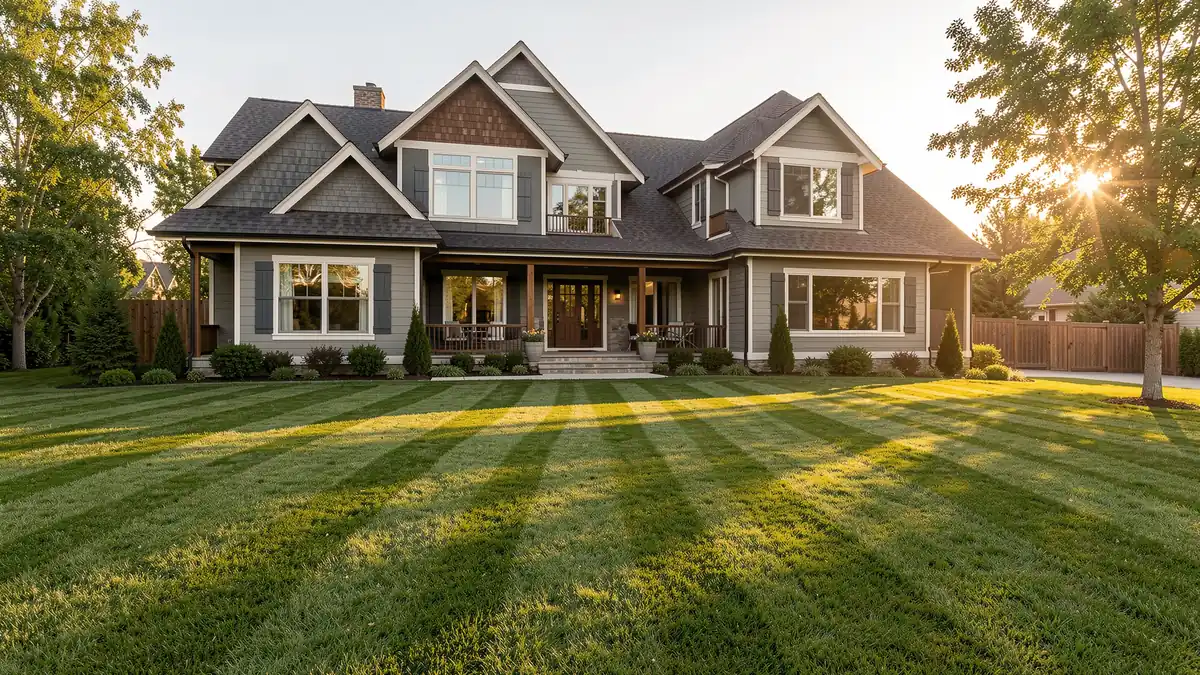
Lawn care prices in Indianapolis: the ranges
These bands start from national benchmarks — $35–$60 per mow for a typical 5,000–10,000 sq ft lawn — and shade them down for Indianapolis, which prices below the national average. Every figure is a hedged range, not a surveyed price: lot size, tree cover, access and frequency move real quotes around inside each band.
| Service | Typical Indianapolis range | What drives it |
|---|---|---|
| Weekly mowing, typical lawn | $30–$55 / visit | Below the national band; biweekly adds 15–25% |
| Small-lawn minimum charge | $30–$45 | Near-downtown bungalow lots hit it constantly |
| Mowing, 1/2 acre and larger | $70–$140 / visit | Common in Carmel, Fishers, Zionsville and Greenfield |
| Core aeration | $70–$180 | Clay compaction makes it near-annual; fall window |
| Fall leaf cleanup | $150–$400 | Heavy shade canopy; multi-visit contracts common |
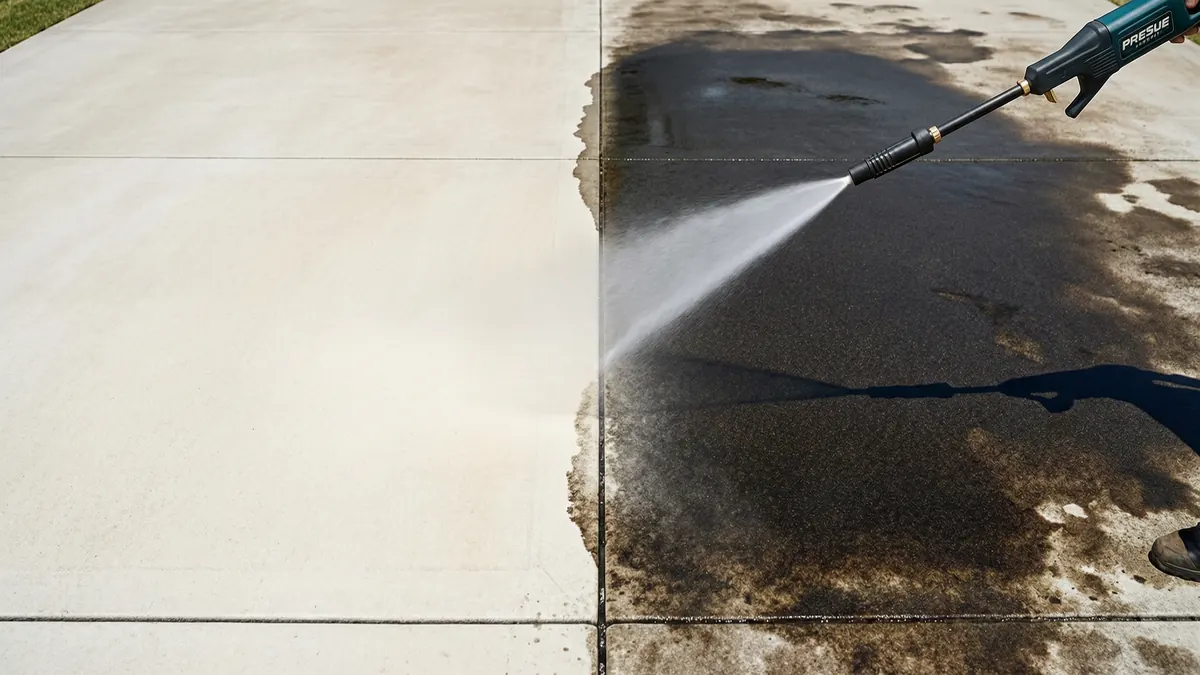
| Pressure washing, driveway | $130–$280 | Concrete at roughly $0.15–$0.30 per sq ft |
| Pressure washing, house wash | $220–$500 | Siding soft wash at roughly $0.30–$0.60 per sq ft |
Submarkets spread inside those bands. Inside the old city — Irvington, Fountain Square, Broad Ripple — lots are small and quotes land near the minimum. Marion County's mid-century subdivisions (Warren, Perry, Washington townships) carry the classic 7,000–10,000 sq ft lot that anchors the middle of every range. Hamilton County to the north — Carmel, Fishers, Westfield, Zionsville just over the county line — runs larger lots, higher incomes and the top of the bands, while doughnut counties like Hendricks, Johnson and Hancock quote friendlier for the same grass.
What moves prices in Indianapolis
The season runs a clean 30 weeks. Mowing typically starts with early April green-up and ends in late October or early November — roughly 29–31 billable weeks. Purdue Extension's maintenance calendar for Indiana lawns (AY-27-W) says to begin mowing as soon as the lawn greens up and begins growing, holding a 2.5–3.5 inch height — which in practice means the first real cuts land the first or second week of April. Spring sprints: May growth can need weekly cuts on fed lawns, growth checks in the dry weeks of August, and September rain brings a second push before frost ends it. If a provider quotes a flat seasonal price, check the arithmetic over about 30 weeks, not a generic 32.
Cool-season grass, heavy clay. Nearly every Indianapolis lawn is tall fescue, Kentucky bluegrass or a fine fescue mix — the cool-season grasses Purdue's home lawn publications are built around. The clay underneath is the real local character: it compacts, ponds in low spots and cracks in August, which is why aeration and overseeding sell themselves here every fall. Mowing tall — staying near that 3–3.5 inch Purdue ceiling — shades out crabgrass and keeps root depth ahead of the clay, and mulched clippings returning free nitrogen matters more on these soils than any bagging upcharge.
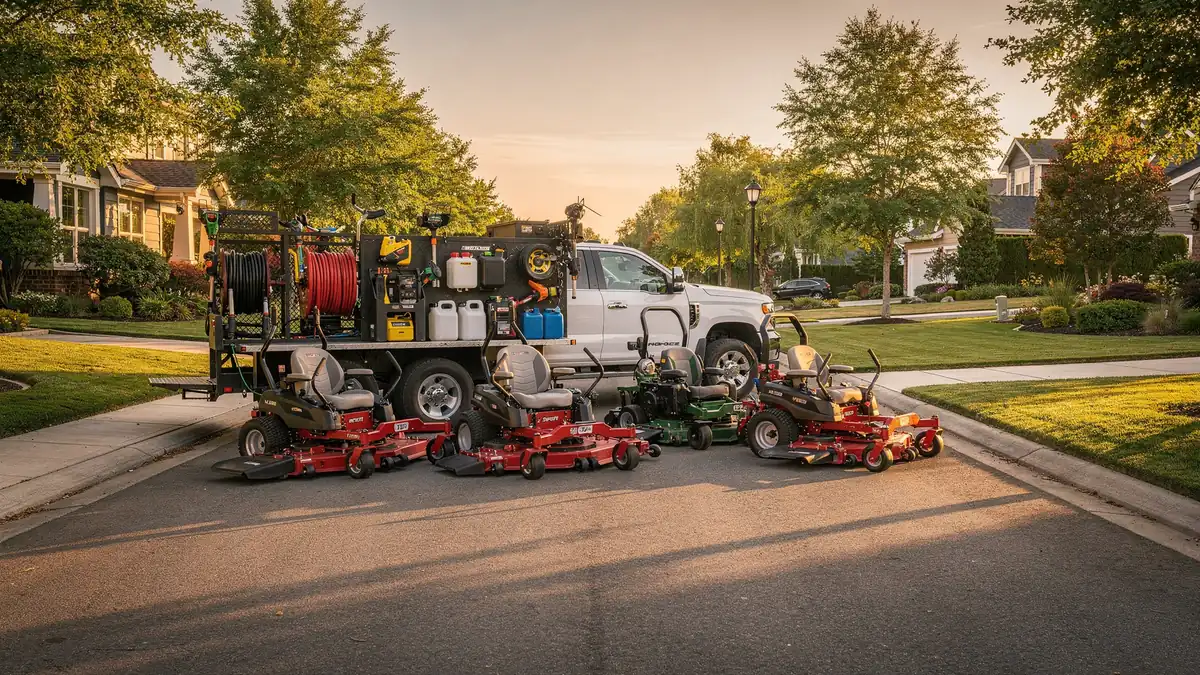
Local cost drivers. The Indianapolis market is crowded with solo operators and two-man crews, which keeps per-visit prices below the coasts, but the cost floor — fuel, insurance, dump fees, blade wear on rocky clay — is national. Mature oaks and maples in the older neighborhoods generate real leaf volume (see the leaf cleanup pricing guide for how that should be priced), and crews bidding commercial routes should cross-check wages against the Bureau of Labor Statistics grounds maintenance occupational data. The price pressure in this market is real; the margin answer is route density, not rate cuts.
Mowing price ladder in Indianapolis
| Lot size | Typical per visit |
|---|---|
| Under 5,000 sq ft | $30–$40 |
| 5,000–10,000 sq ft | $30–$55 |
| 10,000–20,000 sq ft | $50–$85 |
| 1/2 acre (≈21,800 sq ft) | $70–$125 |
| 1 acre and up | $100–$160 |
Fenced corners, tight gates, drainage swales and creek lots with slopes justify the top of a row; open subdivision frontage with clean lines quotes at the bottom. Those are difficulty modifiers — the same +10–25% math every other metro applies — and dog-waste pickups or a knee-high first cut are priced as separate jobs, not favors.
Questions Indianapolis customers actually ask
Do I really need aeration every year? On Indianapolis clay, most fescue lawns benefit from it annually — compaction, not neglect, is what thins them. Late August through October is the prime window because aeration pairs with overseeding. See the aeration and overseeding pricing guide for how the pair should be quoted.
What happens in a dry August? Cool-season grass slows or goes dormant; per-visit billing pauses naturally, and flat monthly contracts should say in writing how skipped cuts are credited. Ask before signing in April — the good contracts answer the question before you ask it.
Is biweekly mowing cheaper? Per visit, usually 15–25% more, not less — taller grass takes longer everywhere. Biweekly saves money only on slow-growing or zoysia-free shaded lawns; on sprinting May fescue it usually just trades a cheap cut for an expensive one.
Quoting against these ranges
Homeowners: collect three written quotes in March, confirm liability insurance, and weigh the cheapest bid against the odds it disappears in June. Pros: set the per-visit number with the mowing price calculator, floor your cleanup and first-cut pricing with the hourly rate calculator, and compare against 50 metros on the lawn care prices by city hub.
FAQ
How much does lawn mowing cost per cut in Indianapolis?
Typically $30–$55 per visit for a standard 5,000–10,000 sq ft lawn, with a $30–$45 minimum — a little under the national $35–$60 band. Affordable Midwest pricing, dense suburbs and plenty of crew competition hold quotes down; big Hamilton County lots and heavy tree cover push them up.
When does the mowing season start and end in Indianapolis?
Typically early April through late October into early November — roughly 29–31 billable weeks. Purdue Extension's Indiana lawn calendar says to begin mowing as soon as the lawn greens up and grows, at a 2.5–3.5 inch height.
What grass grows in Indianapolis lawns?
Cool-season mixes dominate: tall fescue and Kentucky bluegrass on most lawns, with fine fescue in shade — the grasses Purdue Extension's maintenance calendar for Indiana lawns is built around. Warm-season grasses are rare this far north.
How much does core aeration cost in Indianapolis?
Typically $70–$180 on a standard lot. Central Indiana's compacted clay soils make aeration one of the highest-value services you can buy; for fescue and bluegrass, late August through October is the prime window because grass can fill in and seed takes hold.
How much is fall leaf cleanup in Indianapolis?
Typically $150–$400 depending on lot size and canopy, with heavily treed older neighborhoods going higher. The drop peaks in late October and November; multi-visit fall contracts usually beat one heroic final cleanup for both sides.
Why are Indianapolis lawn care prices below the national average?
A low cost of living, small-to-mid lot sizes that keep stops fast, and a large pool of solo operators and small crews competing hard for routes. Per-visit prices sit below the coasts, but fuel, insurance and dump fees cost the same — the discount is real, not enormous.