Lawn Care Prices in Kansas City (2026)
Kansas City sits in the transition zone — the belt where cool-season and warm-season grasses both survive and neither dominates for free — and its lawn care prices run a notch below the national average: typically $30–$55 per mow on a standard lot. Between a bi-state metro full of dense suburbs, clay-heavy soil and storm-prone springs, here is what the money looks like in 2026.
By the MowMath editorial team · Updated $1
Key numbers at a glance
| Service | Typical Kansas City range | What drives it |
|---|---|---|
| Weekly mowing, typical lawn | $30–$55 / visit | Below the national band; biweekly adds 15–25% |
| Small-lawn minimum charge | $30–$45 | Older bungalow lots hit the minimum constantly |
| Mowing, 1/2 acre and larger | $70–$140 / visit | Common at the edges of Johnson County and Lee's Summit |
| Core aeration | $70–$180 | Clay soils compact; pair with fall overseeding on fescue |
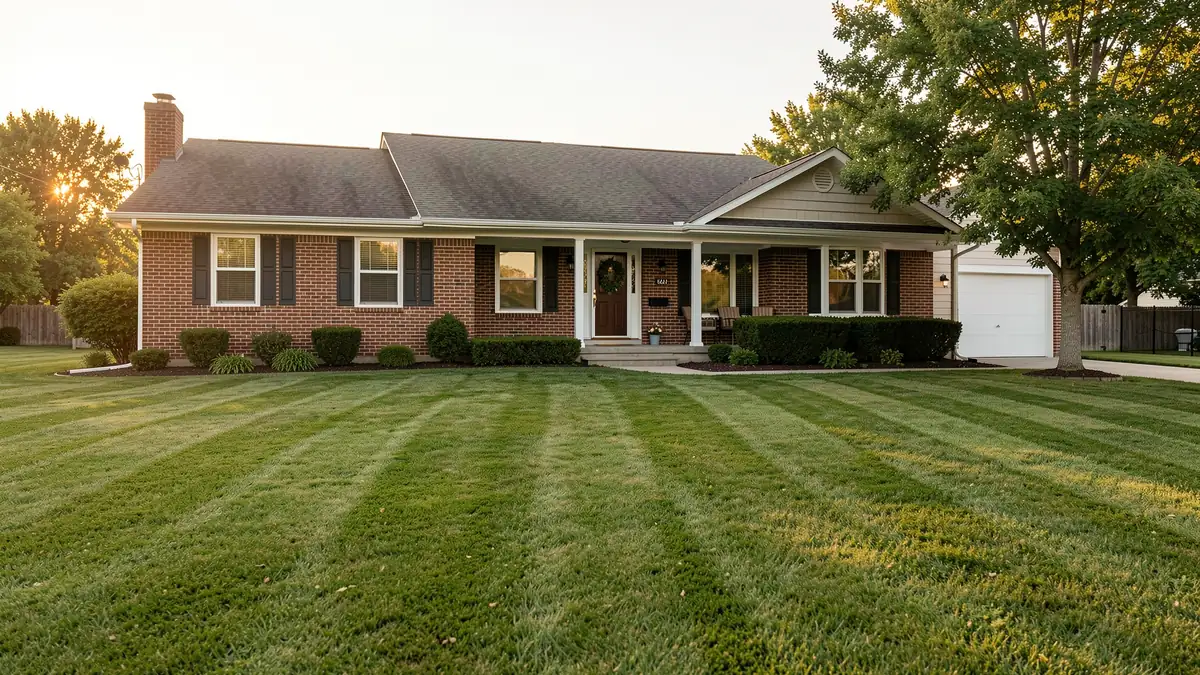
Lawn care prices in Kansas City: the ranges
These bands start from national benchmarks — $35–$60 per mow for a typical 5,000–10,000 sq ft lawn — and shade them slightly down for Kansas City, which prices below the coastal average. Every figure is a hedged range, not a surveyed price: lot size, tree cover, fences and frequency move real quotes around inside each band.
| Service | Typical Kansas City range | What drives it |
|---|---|---|
| Weekly mowing, typical lawn | $30–$55 / visit | Below the national band; biweekly adds 15–25% |
| Small-lawn minimum charge | $30–$45 | Older bungalow lots hit the minimum constantly |
| Mowing, 1/2 acre and larger | $70–$140 / visit | Common at the edges of Johnson County and Lee's Summit |
| Core aeration | $70–$180 | Clay soils compact; pair with fall overseeding on fescue |
| Fall leaf cleanup | $150–$400 | Oak and hackberry canopy; multi-visit contracts common |
| Pressure washing, driveway | $130–$280 | Concrete at roughly $0.15–$0.30 per sq ft |
| Pressure washing, house wash | $220–$500 | Siding soft wash at roughly $0.30–$0.60 per sq ft |
Submarkets spread inside those bands. Older Kansas City, Missouri neighborhoods — Brookside, Waldo, the Independence square area — carry small lots that quote near the minimum. The Johnson County suburbs (Overland Park, Olathe, Leawood) run mid-size to large lots with HOA expectations that push frequency and price toward the top. The Northland — Liberty, Parkville, Gladstone — adds bigger lots with more trimming per stop, and Wyandotte County generally quotes at the friendly end of every range. Inside the city itself, clay pan soils and mature oaks do more to move a quote than the state line does.
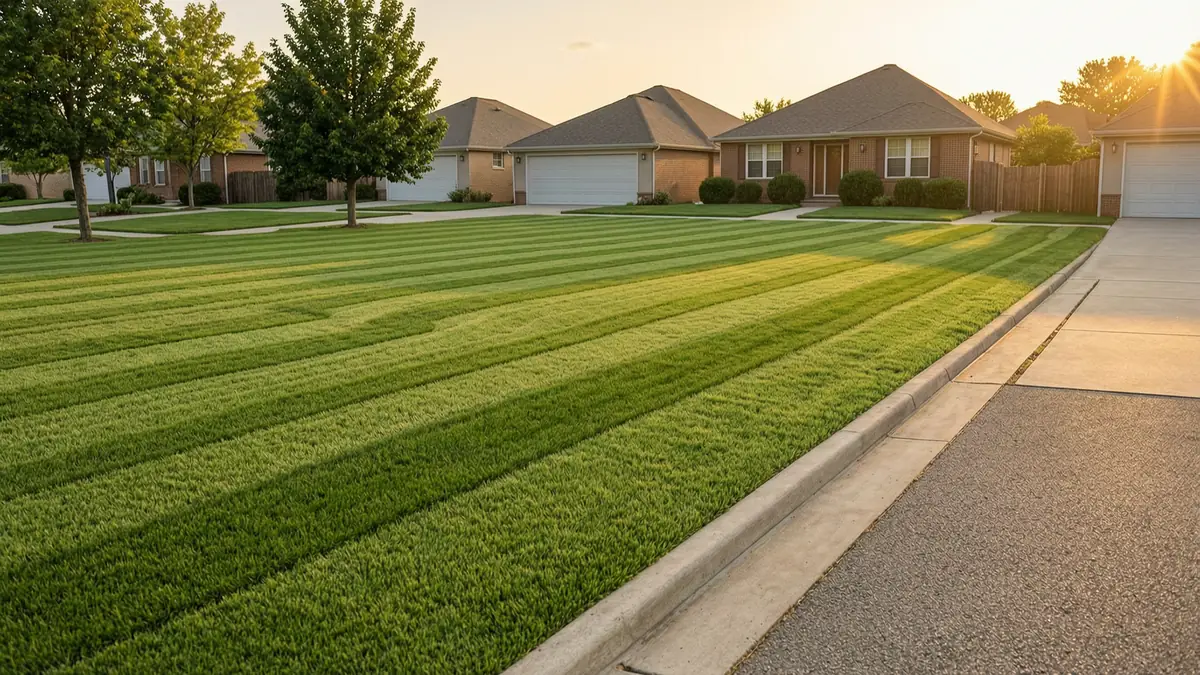
What moves prices in Kansas City
The season is long and split. Mowing typically runs from late March or early April green-up through late October into early November — roughly 30–32 billable weeks. Growth sprints in May and June, slumps during July and August heat when unwatered fescue goes semi-dormant, then rebounds with fall rain. That summer slump is a pricing event: fair contracts spell out whether July billing pauses when growth does, and customers on flat monthly plans should ask before signing, not in August. Fall's second push means the season ends with a bang — leaves, final cuts and aeration all landing in the same six weeks.
Transition-zone grass mixes the calendar. Tall fescue is the metro's workhorse, with Kentucky bluegrass on irrigated lawns and zoysiagrass a popular warm-season pick on sunny lots — the exact spread K-State Research and Extension lays out in its homeowner turf resources, with Johnson County K-State Extension publishing a local lawn calendar for the metro. The mix matters to pricing: a thick fescue lawn wants weekly cuts in spring, a zoysia lawn is content biweekly in heat, and a lawn that's a blend of both is the one that generates arguments about what "weekly" means in July. Mow-height discipline — keeping fescue tall to shade out crabgrass — is the difference between a lawn that survives August and one that gets reseeded in September.
Local cost drivers. A relatively low cost of living and a deep bench of solo operators keep Kansas City quotes below the national band, but clay soil, thunderstorm debris and fuel are the recurring add-ons: straight-line winds drop limbs across the metro every spring and those cleanups bill separately, usually hourly — the hourly rate calculator shows what a fair hourly floor looks like before you accept a debris quote. For crews setting prices, cross-checking wages against the Bureau of Labor Statistics grounds maintenance occupational data keeps labor costs honest. Storm season, not season length, is the variable that most often rewrites a Kansas City lawn contract mid-year.
Mowing price ladder in Kansas City
| Lot size | Typical per visit |
|---|---|
| Under 5,000 sq ft | $30–$40 |
| 5,000–10,000 sq ft | $30–$55 |
| 10,000–20,000 sq ft | $50–$85 |
| 1/2 acre (≈21,800 sq ft) | $70–$120 |
| 1 acre and up | $100–$160 |
Fenced corners with tight gates, creek lots with slopes, and irrigation heads that must be dodged justify the top of a row; wide-open suburban frontage with no obstacles quotes at the bottom. Those are difficulty modifiers, not excuses — price them with the same +10–25% math every other metro uses, and confirm fenceline trimming is included before the first cut, not after.
Questions Kansas City customers actually ask
Should I let fescue go dormant in July? Usually yes — unwatered fescue browns but recovers in fall, and deep weekly watering is the pricier path. What matters is the contract: per-visit billing pauses naturally, flat monthly plans should state how skipped cuts are handled. Ask before summer, not during it.
Is a zoysia lawn cheaper to maintain? Per visit, often yes — zoysia needs fewer cuts through the hot months than sprinting fescue. But it wants an annual dethatch, greens up late and browns early, so the annual calendar shifts rather than shrinks. Get both calendars priced before converting.
Who pays for storm cleanup? Storm debris is almost always a separate line — typically hourly or by volume once it passes "mowing." Photograph the pile, agree on disposal (included or billed at the dump rate) in writing, and expect real limb work to quote closer to a cleanup than a mow. The leaf cleanup pricing guide shows how volume-based pricing should work.
Quoting against these ranges
Homeowners: collect three written quotes in March or early April, confirm liability insurance, and remember the cheapest flyer is usually the one that vanishes in June. Pros: set the per-visit number with the mowing price calculator, sanity-check the season over the ~30 weeks you will actually cut, and compare against other metros on the lawn care prices by city hub.

FAQ
How much does lawn mowing cost per cut in Kansas City?
Typically $30–$55 per visit for a standard 5,000–10,000 sq ft lawn, with a $30–$45 minimum — a notch below the national $35–$60 band. Competition across the bi-state metro and a lower cost of living keep quotes affordable; tree cover and fences push the top of the range.
When does the mowing season start and end in Kansas City?
Typically late March or early April through late October into early November — roughly 30–32 billable weeks. Cool-season grass sprints in May and June, slumps in the July–August heat, and rebounds with fall rain before frost shuts it down.
What grass is most common in Kansas City lawns?
Kansas City sits in the transition zone: tall fescue is the dominant home-lawn grass, with Kentucky bluegrass on irrigated lawns and zoysiagrass a popular warm-season choice on sunny lots, per K-State Research and Extension's turf guidance.
How much does core aeration cost in Kansas City?
Typically $70–$180 on a standard lot, usually priced per thousand square feet. Kansas City's clay-heavy soils compact badly, so fall aeration paired with overseeding on fescue lawns is close to an annual ritual for serious lawns.
How much is fall leaf cleanup in Kansas City?
Typically $150–$400 depending on lot size and tree cover, with heavy oak and hackberry canopy going higher. Many providers sell two- or three-visit fall contracts, which usually beat per-visit pricing when the drop stretches into December.
Why are Kansas City lawn care prices below the national average?
A relatively low cost of living, dense suburbs that keep drive time short, and a deep pool of solo operators and small crews competing on price. The discount is real but modest — fuel, insurance and equipment cost the same here as anywhere.