Lawn Care Prices in New York City (2026)
The lawn care market around New York City runs in the top national band: a typical 5,000–10,000 sq ft suburban lot most often quotes $45–$85 per mow, and the real turf lives in the commuter ring — Long Island, Westchester, northern New Jersey and southern Connecticut — where lots get bigger and labor costs bite hardest. Here is what the ranges look like and why the metro prices the way it does.
By the MowMath editorial team · Updated $1
Key numbers at a glance
| Service | Typical New York metro range (2026) | Notes |
|---|---|---|
| Weekly mowing, 5,000–10,000 sq ft lot | $45–$85 | Route density in tight suburbs offsets traffic elsewhere |
| Small-lawn minimum charge | $40–$65 | The truck, the tolls and the permit parking happen anyway |
| Core aeration, typical lot | $95–$280 | Fall core work, usually paired with overseeding |
| Fall leaf cleanup | $250–$480 | The season's defining job in October and November |
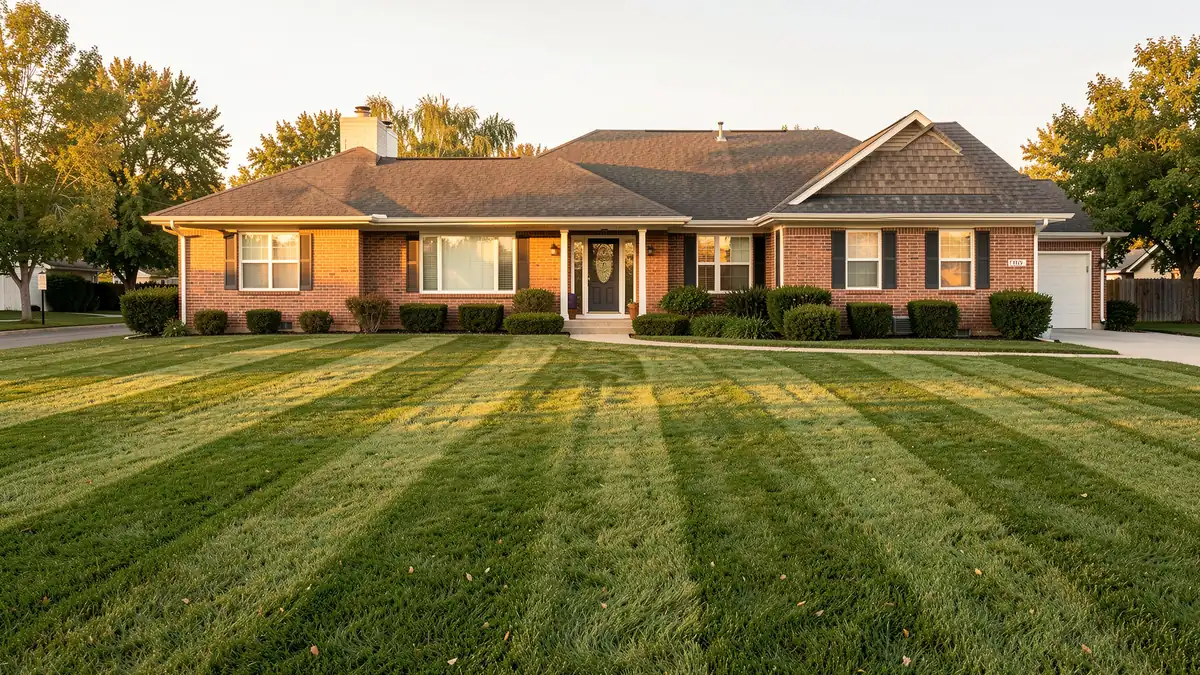
Lawn care prices in New York City: the ranges
The national benchmark is $35–$60 per weekly mow on a typical lot, roughly $0.003–$0.006 per square foot. The New York metro typically runs 25–40 percent above those numbers, which lands most quotes at roughly $0.004–$0.008 per square foot per cut. Small rowhouse and bungalow yards bill near the minimum; large North Shore and Greenwich-scale properties quote on acreage math well past the top of every band. Every figure below is a hedged range, not a surveyed price.
| Service | Typical New York metro range (2026) | Notes |
|---|---|---|
| Weekly mowing, 5,000–10,000 sq ft lot | $45–$85 | Route density in tight suburbs offsets traffic elsewhere |
| Small-lawn minimum charge | $40–$65 | The truck, the tolls and the permit parking happen anyway |
| Core aeration, typical lot | $95–$280 | Fall core work, usually paired with overseeding |
| Fall leaf cleanup | $250–$480 | The season's defining job in October and November |
| Pressure washing, driveway | $150–$360 | 600–1,000 sq ft concrete, freeze-thaw staining |
| Pressure washing, house wash | $320–$800 | 1,500–2,500 sq ft soft wash, older siding needs care |
Where you sit inside those bands depends on the submarket. City yards — Staten Island, eastern Queens, southern Brooklyn — are small and price near the minimum, when a crew can park. Nassau County and inner New Jersey suburbs run the middle on dense routes. Suffolk, central Westchester, northern New Jersey and Fairfield County lots run mid-to-high; estate properties in the Bronxville-to-Greenwich corridor and Long Island's North Shore quote past the ceiling on acreage pricing, mature plantings and long driveways.
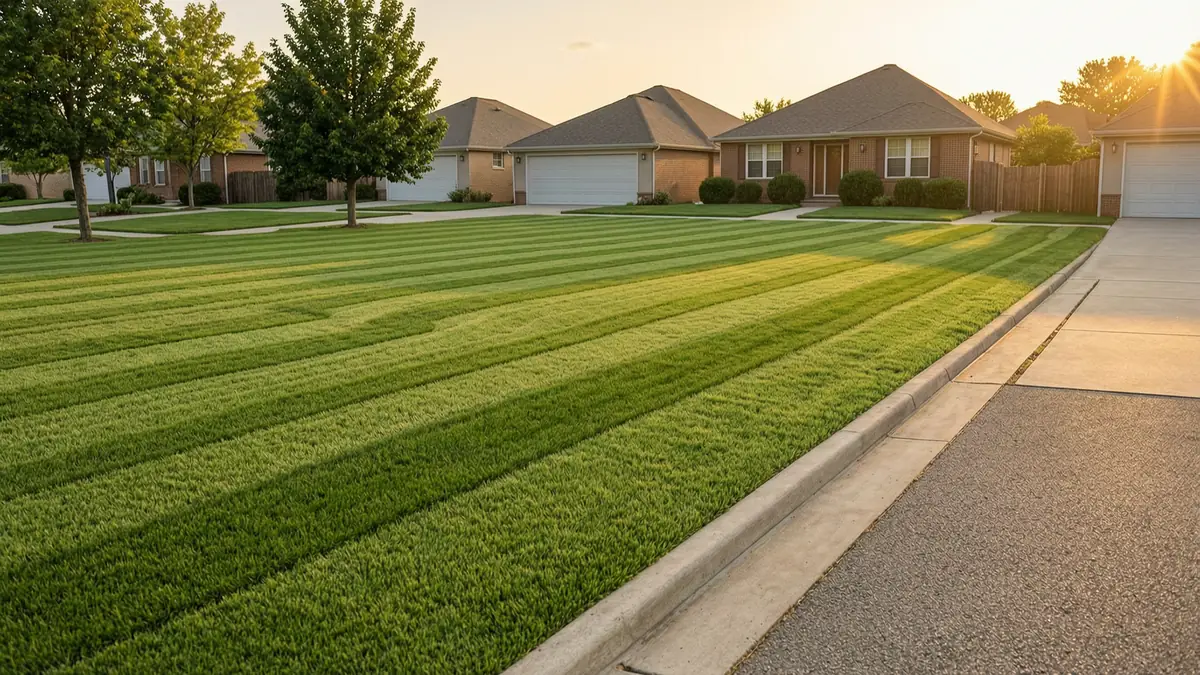
What moves prices in New York City
Season length. The metro's mowing season typically runs late March or early April through October or early November — roughly 28–32 weeks, one of the longer cool-season windows in the country because the coast moderates both spring and fall. May and June surge with cool rain; July and August heat pushes cool-season grass into survival mode and slows the blade; September rains restart growth; then late October hands the calendar to leaf season, a five-to-six-week window where cleanups can out-earn mowing. Irrigation blowouts and the first hard frost close the year.
Grass types. This is cool-season country. Cornell's turf program recommends tall fescue blends or Kentucky bluegrass, perennial ryegrass and fine fescue mixes for New York lawns — bluegrass the backbone of sunny, high-maintenance lawns on Long Island, fine fescue carrying the shade under the mature oaks and maples of older Westchester streets. Fescue-heavy mixes ride through August heat better and cut the watering bill; bluegrass rewards the irrigation systems common on the North Shore with the region's tightest turf.
Local cost drivers. Metro labor and equipment costs sit in the country's top band, and the season's shape concentrates them: a New York crew must earn most of its year in roughly seven months, then pivot to leaf work, cleanups and snow. Tolls, bridge crossings and parkway restrictions on trailers add real time and money between stops — route density is worth more here than in any other metro. Town-by-town rules move cleanup prices too: some suburbs vacuum curbside leaf piles, others mandate paper bags, and bagging costs labor. Tick and mosquito spray programs are a standard spring upsell in wooded suburbs, and only licensed applicators should quote them.
Questions worth asking any New York-area provider:
- How does your town handle leaf disposal? Curbside vacuum weeks versus pay-per-bag changes cleanup pricing materially.
- Is your route on my side of the water or bridge? Crossings and tolls show up in per-visit pricing for scattered customers.
- Is fall cleanup per visit or a season contract? Leaf season is five-plus weeks of real work — contracts price it best.
- Who handles irrigation blowouts, and when? Before first freeze; bundled October visits save a trip fee.
- Are fertilizer and pesticide applications licensed? New York requires certified applicators — ask for the credential.
Stack these numbers against the rest of the country on the lawn care prices by city hub, turn any lot into a defensible per-visit number with the mowing price calculator, and check that a crew's rates clear their real costs with the hourly rate calculator. The local band sets the market; the math keeps you honest inside it.
FAQ
How much does lawn mowing cost in the New York City metro?
Typically $45–$85 per visit on a typical suburban lot, with small yards billing near a $40–$65 minimum and large North Shore, Westchester and Greenwich-scale properties quoting well past $100. Metro labor costs keep the market in the top national band.
When is lawn mowing season in the New York metro area?
Roughly late March or early April through October or early November — about 28–32 weeks. Growth surges in May and June, slows in July and August heat, restarts with September rains, and hands the calendar to leaf cleanups in late October.
What grass grows in New York metro lawns?
Cool-season mixes: Cornell's turf program recommends tall fescue blends or Kentucky bluegrass, perennial ryegrass and fine fescue mixes for New York lawns — bluegrass dominant in sun, fine fescue in shade under mature trees.
How much does aeration cost in the New York metro?
Roughly $95–$280 for a typical lot, single pass, best timed in fall alongside overseeding. Compacted suburban lawn soil and heavy foot traffic make the double pass a common upsell at 25–50 percent more.
How much does fall leaf cleanup cost in the New York metro?
Plan on $250–$480 for a typical lot, and far more under mature oaks and maples. Which suburb you're in matters as much as leaf volume — curbside vacuum programs, bagging rules and disposal fees vary town to town.
Why is lawn care so expensive around New York City?
Top-band labor and operating costs concentrated into a roughly seven-month season, tolls and traffic between stops, permit-parking and small-gate access in older neighborhoods, and heavy fall leaf volume. The price buys a crew that can operate profitably in one of the country's costliest metros.