Pressure Washing Prices in Miami (2026)
Miami pressure washing prices typically run above national benchmarks — the metro sits in the high cost band. A 600–1,000 sq ft driveway most often quotes $140–$310, a full house soft wash runs roughly $290–$700, and wood decks land near $175–$410. The market earns its character from the tropics: mildew, algae and mold regrow faster here than almost anywhere in the country, salt air films every surface within reach of the water, and hurricane season swings demand from steady to booked-out in a single storm week.
By the MowMath editorial team · Updated $1
Key numbers at a glance
| Job | Typical Miami range (2026) | Notes |
|---|---|---|
| Driveway (600–1,000 sq ft) | $140–$310 | Fast year-round algae; salt staining near the water |
| House wash (1,500–2,500 sq ft siding) | $290–$700 | Soft wash; shaded stucco grows mildew fast |
| Driveway + house bundle | $400–$875 | Best per-hour value; same stop, same setup |
| Wood deck (200–400 sq ft) | $175–$410 | Lower PSI; humidity feeds surface growth |
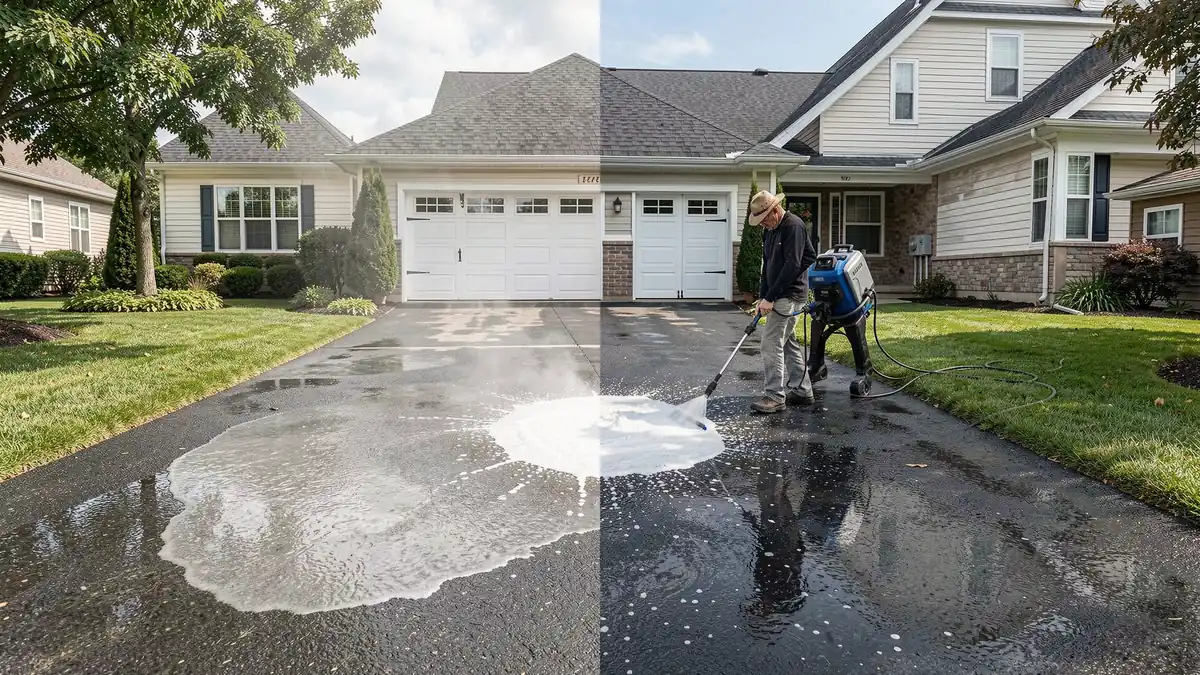
Pressure washing prices in Miami: the ranges
The national benchmarks this site uses are $120–$260 for a driveway, $250–$600 for a house wash and $150–$350 for a deck. Miami sits in the high cost band, so those figures shift up — typically by roughly 15–20 percent — and exposure decides where inside each band a quote lands. A Coral Gables stucco with light dust and good sun washes fast; the same house under a full mango canopy carries algae on every shaded elevation, and a paver pool deck in Kendall usually adds re-sanding on top of the wash. Every number below is a hedged range for planning, not a surveyed price.
| Job | Typical Miami range (2026) | Notes |
|---|---|---|
| Driveway (600–1,000 sq ft) | $140–$310 | Fast year-round algae; salt staining near the water |
| House wash (1,500–2,500 sq ft siding) | $290–$700 | Soft wash; shaded stucco grows mildew fast |
| Driveway + house bundle | $400–$875 | Best per-hour value; same stop, same setup |
| Wood deck (200–400 sq ft) | $175–$410 | Lower PSI; humidity feeds surface growth |
| Patio / pavers + poly sand | $230–$525 | Pool decks are steady work; screen cages extra |
| Fence (linear ft) | $1.75–$4.00 / ft | Both sides priced separately |
Inside the metro, the pattern runs by era and distance from the water. Older single-family cores — Coral Gables, Miami Shores, Miami Beach's decorative stucco districts — carry detailed trim, soft finishes and shade that all demand low-pressure care, quoting mid-to-high. The suburban rings — Kendall, Doral, Westchester, down through Homestead — are stucco-over-block with wide driveways and screened pool enclosures that wash efficiently, often on recurring maintenance plans. Along the coast and on the barrier islands, salt film and short wash cycles push the same jobs into the upper half of the band, and high-rise condo work is its own access-and-logistics category entirely. Access, shade and surface, more than geography, decide the number.

What moves prices in Miami
Climate, mildew and salt air. Miami is tropical — a warm rainy season roughly May into October, a drier warm winter, and humidity all year. The result is the fastest surface growth of any market on this site: green algae films driveways in months, mildew and mold colonize shaded stucco and fence lines, and black streaks show on screen enclosures and trim. Soft-wash chemistry is not optional here — treatment kills the growth and resets the clock, while rinse-only washing looks clean for a few weeks. Salt air adds a second layer near the water, filming siding, glass and concrete close to the coast. Many Miami homes are washed roughly twice a year (hedge with your provider — shade and coastal exposure decide), and properties in sales or rental rotation often wash quarterly.
Stucco, housing age and pool decks. The post-1950s stock is dominated by stucco over concrete block — a durable surface that responds well to soft washing but rewards gentle chemistry on older, softer finishes; the Art Deco and historic-mediterranean districts add decorative stucco where high pressure is simply forbidden by common sense. Screened pool enclosures are nearly standard and need screen-safe low pressure on mesh and framing. Paver pool decks are the other staple, usually quoted with joint re-sanding included or as a line item. Miami-Dade's hurricane-era building stock adds impact windows and hardy finishes, but sandy soil and high water tables still settle and crack slabs — careful crews drop pressure on damaged sections rather than blast them.
Hurricane season and demand surges. Hurricane season (roughly June through November) is the demand engine. Ahead of storms: homeowners want clean surfaces and clear drainage. After storms: crews chase leaves, sediment, staining and salt spray for weeks while good operators run waitlists and quotes sit at the top of every band. Outside of storm weeks the market is steady year-round — no northern off-season — which supports recurring maintenance plans (monthly or quarterly routes are common in the condo and rental segments). Book routine washes in the late-fall and winter shoulder, not the week after a named storm.
Local cost drivers and water rules. Labor, fuel and insurance run above national averages in this market — that is the high-band premium in every row of the table, and commercial liability coverage in a hurricane-exposed coastal metro is not cheap. On water: the South Florida Water Management District enforces year-round watering rules and can tighten them in drought phases — the rules mainly govern irrigation, and a wash uses a small fraction of that volume, but verify the current phase with SFWMD before scheduling recurring work. As everywhere, wash water belongs out of storm drains — in a metro laced with canals that drain straight to the bay and ocean, that expectation shapes how reputable crews set up on curb-line driveways.
Questions worth asking any Miami provider:
- Do you treat the mildew or just rinse it? Soft-wash chemistry kills growth and resets the clock; water alone postpones it for weeks.
- How do you handle salt film near the water? A low-pressure soft wash with the right rinse, not a blast that drives salt into pores.
- Is pool-deck re-sanding included? Washing pavers without refreshing joint sand is half the job.
- Do you offer a recurring maintenance plan? In this climate, a twice-yearly or quarterly route is usually cheaper per visit than one-off bookings.
Stack these bands against the other 24 metros on the pressure washing prices by city hub, turn any surface into a defensible number with the pressure washing calculator, and compare the other half of the property budget on the lawn care prices in Miami page. The local band sets the market; the math keeps you honest inside it.

FAQ
How much does pressure washing cost in Miami?
Miami sits in the high cost band, so expect roughly 15–20 percent above national benchmarks: typically $140–$310 for a 600–1,000 sq ft driveway, $290–$700 for a full house soft wash, and $175–$410 for a wood deck. Fast year-round mildew, salt-air film and hurricane-season surges push quotes toward the top of the band.
How much does it cost to pressure wash a driveway in Miami?
Typically $140–$310 for 600–1,000 sq ft of concrete. Tropical humidity grows algae and mildew on driveways faster than almost anywhere in the country, so treatment chemistry is standard and slows regrowth compared with rinse-only washing.
How much does a house wash cost in Miami?
Roughly $290–$700 for 1,500–2,500 sq ft of siding, soft wash with chemicals included. Stucco over block is the norm, mildew regrows quickly in the tropical climate, and homes near the water add salt film that needs a proper soft-wash rinse.
How often do Miami homes need pressure washing?
More often than almost anywhere else. Tropical humidity, rainy summers and salt air mean many Miami homes are washed about twice a year — hedge with your provider based on shade and distance from the water — and properties on the market or in rental rotation often wash quarterly.
Do Miami water restrictions affect pressure washing?
Rarely directly. The South Florida Water Management District enforces year-round watering rules and can tighten them in drought phases, but the rules mainly govern irrigation, and a wash uses a small fraction of that volume. Verify the current phase with SFWMD before scheduling recurring work.