Pressure Washing Prices in Minneapolis (2026)
Minneapolis pressure washing prices typically track national benchmarks — the metro sits in the average cost band. A 600–1,000 sq ft driveway most often quotes $120–$260, a full house soft wash runs roughly $250–$600, and wood decks land near $150–$350. The market earns its character from latitude: five months of road salt and sand leave every driveway wearing a white film each spring, freeze-thaw pits and cracks the concrete, and the whole year's demand compresses into a short season that books good crews out by Memorial Day.
By the MowMath editorial team · Updated $1
Key numbers at a glance
| Job | Typical Minneapolis range (2026) | Notes |
|---|---|---|
| Driveway (600–1,000 sq ft) | $120–$260 | Spring salt-and-sand film; freeze-thaw cracks need lower pressure |
| House wash (1,500–2,500 sq ft siding) | $250–$600 | Soft wash; shaded north walls grow summer mildew |
| Driveway + house bundle | $350–$750 | Best per-hour value; same stop, same setup |
| Wood deck (200–400 sq ft) | $150–$350 | Lower PSI; grey weathered cedar is common here |
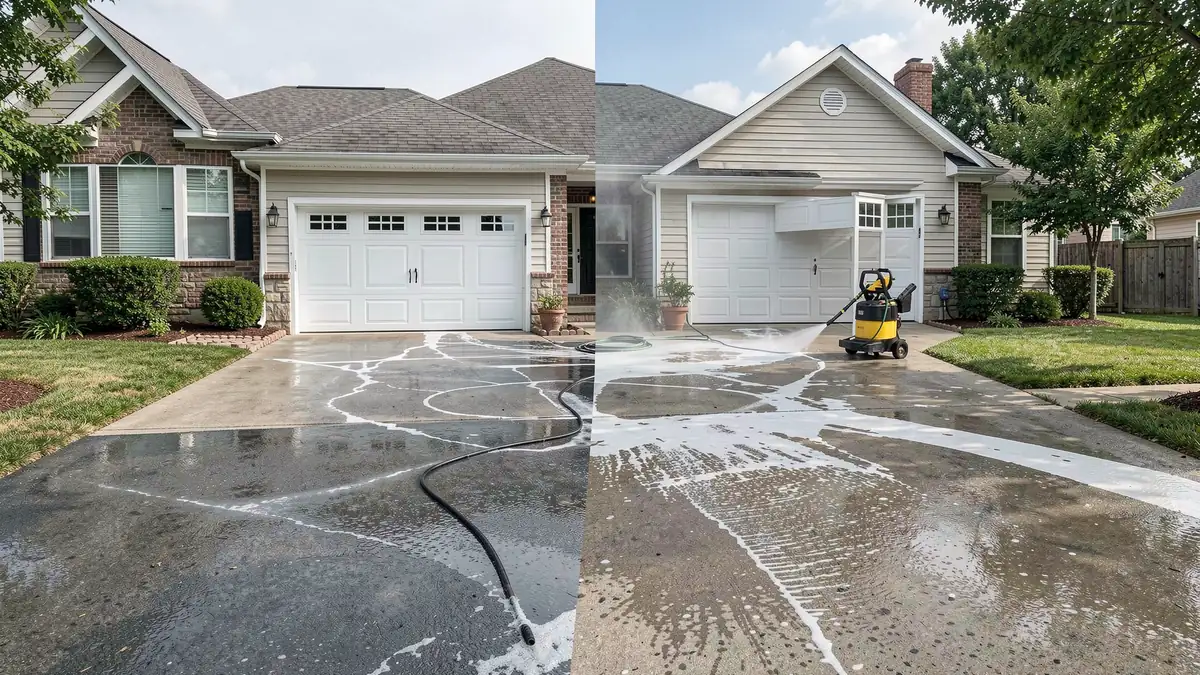
Pressure washing prices in Minneapolis: the ranges
The national benchmarks this site uses are $120–$260 for a driveway, $250–$600 for a house wash and $150–$350 for a deck, and Minneapolis sits in the average cost band — so those figures hold, with condition and timing deciding where inside each range a quote lands. A garage-front driveway in Edina with one winter of salt film washes fast; the same driveway after a hard winter carries pitting and hairline cracks that want dropped pressure, and an older south Minneapolis home with two stories and mature shade quotes toward the top of the house-wash band. Every number below is a hedged range for planning, not a surveyed price.
| Job | Typical Minneapolis range (2026) | Notes |
|---|---|---|
| Driveway (600–1,000 sq ft) | $120–$260 | Spring salt-and-sand film; freeze-thaw cracks need lower pressure |
| House wash (1,500–2,500 sq ft siding) | $250–$600 | Soft wash; shaded north walls grow summer mildew |
| Driveway + house bundle | $350–$750 | Best per-hour value; same stop, same setup |
| Wood deck (200–400 sq ft) | $150–$350 | Lower PSI; grey weathered cedar is common here |
| Patio / pavers + poly sand | $200–$450 | Poly sand matters after freeze-thaw winters |
| Fence (linear ft) | $1.50–$3.50 / ft | Both sides priced separately |
Inside the metro, the pattern runs by era. Minneapolis and St. Paul proper carry one of the older central housing stocks among big U.S. cities — pre-1940 homes are common, with mature trees, older concrete and two-story layouts that quote mid-to-high because shade feeds mildew and access takes time. The postwar ring — Edina, Bloomington, Golden Valley — runs mid-century ramblers and driveways that wash efficiently. The fast-growing exurbs — Maple Grove, Woodbury, Lakeville — add wide new driveways and vinyl two-stories that clean quickly, often through HOA accounts. Access, shade and surface, more than geography, decide the number.

What moves prices in Minneapolis
Climate, salt and mildew. Minneapolis is humid continental — real winters, humid summers. The signature job is the spring salt wash: months of de-icing salt and sand leave a white, chalky film and rust-colored staining on driveways, walkways and garage aprons, and the first warm weeks trigger a wave of wash calls. Summer humidity grows mildew on shaded north walls and fence lines, though nothing like the South's pace. The practical outdoor season runs roughly April into October, so the year's work compresses; most homes here benefit from a wash about once a year, with the post-winter spring clean the most common booking.
Housing age and freeze-thaw concrete. The old central stock brings brick, stucco, aluminum and vinyl siding — surfaces that soft wash well but reward care, and pre-1978 homes may carry lead paint, so ask any provider about lead-safe practices before work begins (verify requirements with the EPA's lead-safe certified firm resources). The bigger mechanical issue is underfoot: freeze-thaw cycles pit, spall and crack concrete across the metro, and high pressure across damaged areas blasts out aggregate and widens fault lines. Careful crews drop PSI on spalled sections, treat the grime in the cracks, and quote sealing — which also happens to be the right timing conversation, because a sealed driveway heads into the next winter in better shape.
Seasonality and the booking crunch. Demand here is a bell curve: quiet from November through March, then a wall of bookings once the salt film is visible and temps hold. May and June are the crunch — good crews run waitlists and quotes sit in the upper half of every band. July and August stay steady with deck and fence prep ahead of staining season; September offers a second window before leaf fall. Book April or late September for faster scheduling and the lower half of the band; book the post-winter peak and expect to wait your turn.
Local cost drivers and water rules. Labor and operating costs run near national averages, which is why the benchmarks hold. On water: Minneapolis may restrict lawn watering during dry spells, but those rules target irrigation, and a wash uses a small fraction of that volume — verify any current outdoor water rules with the City of Minneapolis before scheduling recurring work. Two local expectations shape how crews operate: wash water belongs out of storm drains, because the metro's runoff feeds lakes and the Mississippi River; and spring salt-chloride concerns make crews mindful of where rinse water goes — a reasonable question to ask any bidder.
Questions worth asking any Minneapolis provider:
- How do you handle pitted or spalled concrete? Dropped pressure on damaged areas and a sealer conversation, not full blast across the slab.
- What is your lead-safe practice on pre-1978 homes? Any provider should have a clear answer before touching old painted surfaces.
- Can you schedule me for April or September? Shoulder-month bookings often price in the lower half of the band.
- Can you bundle driveway, house and deck? Bundles are the best per-hour value in every market, including this one.
Stack these bands against the other 24 metros on the pressure washing prices by city hub, turn any surface into a defensible number with the pressure washing calculator, and compare the other half of the property budget on the lawn care prices in Minneapolis page. The local band sets the market; the math keeps you honest inside it.

FAQ
How much does pressure washing cost in Minneapolis?
Minneapolis typically tracks national benchmarks: roughly $120–$260 for a 600–1,000 sq ft driveway, $250–$600 for a full house soft wash, and $150–$350 for a wood deck. Winter road-salt film, freeze-thaw spalling and a compressed outdoor season move quotes toward the top of the band in spring.
How much does it cost to pressure wash a driveway in Minneapolis?
Typically $120–$260 for 600–1,000 sq ft of concrete. The spring salt-and-sand film comes off with a standard wash, but freeze-thaw pitting and cracks are common — careful crews drop pressure on spalled areas, and sealing is the natural follow-up conversation.
How much does a house wash cost in Minneapolis?
Roughly $250–$600 for 1,500–2,500 sq ft of siding, soft wash with chemicals included. Many Twin Cities homes wear aluminum, vinyl or fiber-cement siding that responds well to soft washing, and shaded north walls grow mildew over humid summers.
Why is spring the most expensive time to book in Minneapolis?
The outdoor season is short — roughly April into October — and the post-winter wave packs a year of salt film, grime and mildew into a few weeks of bookings. Good crews run waitlists in May and June; book April or late September for quicker scheduling and quotes in the lower half of the band.
Do Minneapolis water restrictions affect pressure washing?
Rarely. The city may limit lawn watering during dry spells, but those rules target irrigation, and a wash uses a small fraction of that volume. Verify any current outdoor water rules with the city before scheduling recurring work.