Pressure Washing Prices in Portland (2026)
Portland pressure washing prices typically run 15–25 percent above national benchmarks: a 600–1,000 sq ft driveway most often quotes $140–$325, a full house soft wash runs roughly $290–$750, and wood decks land near $175–$440. The market pairs West Coast labor costs with a Willamette Valley climate that runs a long, damp green season and a short, glorious dry one — which means moss and algae on every shaded surface for eight months, then a booking stampede the moment the sun arrives. The city is also unusually explicit about wash water: Portland publishes pressure-washing runoff rules outright.
By the MowMath editorial team · Updated $1
Key numbers at a glance
| Job | Typical Portland range (2026) | Notes |
|---|---|---|
| Driveway (600–1,000 sq ft) | $140–$325 | Algae film and mossed joints; pretreatment included |
| House wash (1,500–2,500 sq ft siding) | $290–$750 | Soft wash; shaded walls mildew through the green season |
| Driveway + house bundle | $400–$940 | Best per-hour value; same stop, same setup |
| Wood deck (200–400 sq ft) | $175–$440 | Lower PSI; moss in the gaps, treatment rinse after |
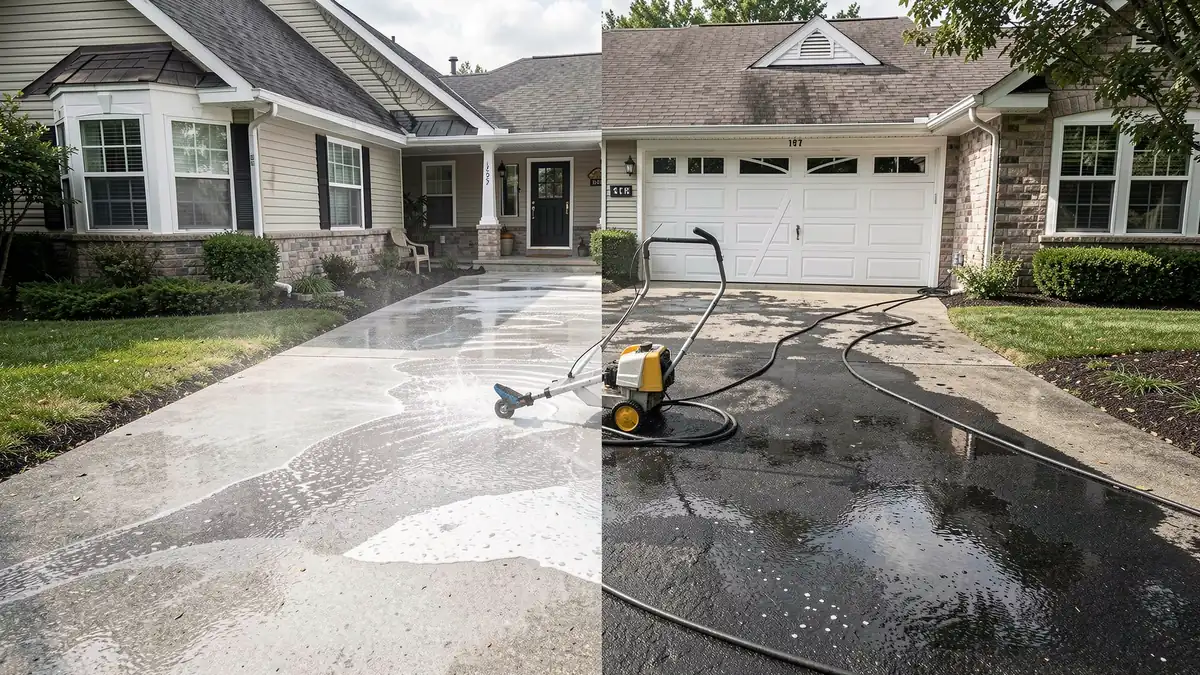
Pressure washing prices in Portland: the ranges
The national benchmarks this site uses are $120–$260 for a driveway, $250–$600 for a house wash and $150–$350 for a deck. Portland sits in the high cost band, so those figures typically shift up 15–25 percent. Growth is the pricing wildcard here: a clean-looking driveway often carries an algae film slick enough to walk carefully on, and moss settles into deck-board gaps, paver joints and shaded fence lines through the wet season, adding hand-detailing and treatment time that plain square-foot math misses. Every number below is a hedged range for planning, not a surveyed price.
| Job | Typical Portland range (2026) | Notes |
|---|---|---|
| Driveway (600–1,000 sq ft) | $140–$325 | Algae film and mossed joints; pretreatment included |
| House wash (1,500–2,500 sq ft siding) | $290–$750 | Soft wash; shaded walls mildew through the green season |
| Driveway + house bundle | $400–$940 | Best per-hour value; same stop, same setup |
| Wood deck (200–400 sq ft) | $175–$440 | Lower PSI; moss in the gaps, treatment rinse after |
| Patio / pavers + poly sand | $230–$560 | Shaded patios grow green fast; sanding sells well |
| Fence (linear ft) | $1.75–$4.40 / ft | Both sides priced separately |
Inside the metro, inner east-side neighborhoods — Alberta, Hawthorne, Montavilla — run craftsman and foursquare homes with mature tree cover, the heaviest moss pressure in the market and quotes at the top of every band. Southwest Portland and the West Hills add slope, shade and cedar to the ticket. The eastern suburbs — Gresham, Happy Valley, outer Damascus — and the newer developments of Washington County — Beaverton, Hillsboro, Tigard — carry bigger driveways and newer fiber-cement and composite siding that wash fast at suburban route density, which keeps per-hour productivity strong outside the core.

What moves prices in Portland
Climate, moss and algae. The Willamette Valley runs a long wet season — roughly October through May — and everything that stays damp through it grows: moss in deck-board gaps and paver joints, algae slicks on shaded concrete, mildew and grime on north-facing siding under the tree canopy. The pricing consequence is that a Portland wash is rarely just a rinse: competent crews pretreat, rinse and often apply a treatment rinse to slow regrowth, and that chemistry and dwell time is priced into every serious quote. A property here typically benefits from a wash every one to two years, with shaded lots on the annual end and decks sometimes more often.
Housing stock and surfaces. Portland's signature housing is early twentieth century — craftsman bungalows and foursquares with wood or cedar siding — alongside mid-century ramblers and decades of newer fiber-cement and composite builds. The recurring theme is soft, weather-checking wood: cedar siding fuzzes under an aggressive wand and turns a wash into a sanding job, so soft wash with a treatment rinse is the professional default. Concrete of a certain age shows moss-settled joints and dark algae streaks from months of rain; lower pressure and more chemistry do the lifting. A test patch on weathered cedar or old paint is a 30-second insurance policy against a four-figure repair.
Season, labor and route math. The 15–25 percent premium over national benchmarks is mostly overhead — West Coast wages, commercial insurance, fuel and bridges that turn cross-town moves into unpaid time. What Portland gives back is a peculiar season shape: work is possible year-round because hard freezes are rare, but demand detonates in the dry stretch from roughly July through September, when surfaces finally dry, everything green shows up green, and homeowners book in waves. Smart operators sell maintenance plans in spring to lock the summer calendar before the rush, and keep driveway-and-flatwork work flowing through the shoulder months when the rain returns.
Water rules — spelled out. Portland is one of the few major cities with a page dedicated to pressure-washing runoff: the City's environmental services rules prohibit wash water from pressure washing from flowing to the stormwater system, because those drains empty to the Willamette River and local streams untreated (portland.gov). Crews are expected to capture or divert wash water — berms, drain covers, routing to landscaping or a sanitary connection. Supply is rarely the constraint in the Bull Run-fed system; disposal discipline is the professional baseline, and a provider's answer about wash-water capture is the fastest credibility test there is.
Questions worth asking any Portland provider:
- Soft wash or pressure on cedar? Cedar siding, fencing and decking should never see a close-range wand.
- Is a treatment rinse included? Killing what the rain regrows slows the next green film — get it on the quote.
- How do you keep wash water out of storm drains? Berms, drain covers and diversion are the professional answers in Portland.
- Can you take the deck with the driveway? Bundling is where the per-hour math turns in your favor.
Stack these bands against the other 24 metros on the pressure washing prices by city hub, turn any surface into a defensible number with the pressure washing calculator, and compare the other half of the property budget on the lawn care prices in Portland page. The local band sets the market; the math keeps you honest inside it.
FAQ
How much does pressure washing cost in Portland?
Portland typically runs 15–25 percent above national benchmarks: roughly $140–$325 for a 600–1,000 sq ft driveway, $290–$750 for a full house soft wash, and $175–$440 for a wood deck. West Coast labor costs plus moss-treatment time set the floor.
How much does it cost to pressure wash a driveway in Portland?
Typically $140–$325 for 600–1,000 sq ft of concrete. Shaded slabs grow a slick algae film through the long wet season, so quotes include pretreatment, and moss-settled joints and edges add hand-detailing time that pushes mossed driveways toward the top of the band.
How much does it cost to pressure wash a deck in Portland?
Roughly $175–$440 for 200–400 sq ft of decking. Moss works into the gaps between boards and the damp months gray and mildew the surface, so the job is low-pressure washing plus a treatment rinse — full pressure on soft, weathered cedar just tears the grain.
When is pressure washing season in Portland?
Work happens year-round, but the dry stretch from roughly July through September is the rush — surfaces finally dry out, everything that grew all winter is visible, and homeowners schedule in waves. Book early summer; by August the established crews are weeks out.
Can pressure washing runoff go into Portland storm drains?
No. The City of Portland explicitly prohibits wash water from pressure washing from flowing to the stormwater system — it drains to the Willamette and local streams untreated. Crews must capture or divert it, typically to landscaping or a sanitary connection; the city's environmental services pages spell out the current rules.