Pressure Washing Prices in Seattle (2026)
Seattle pressure washing prices typically run 15–25 percent above national benchmarks: a 600–1,000 sq ft driveway most often quotes $140–$325, a full house soft wash runs roughly $290–$750, and wood decks land near $175–$440. The market pairs big-metro labor costs with a moss problem no Sun Belt city understands — months of damp air that slick every shaded slab, green every north wall and turn deck maintenance into an annual ritual. The flip side is a season that never truly closes; the rain that grows the moss also guarantees the customers.
By the MowMath editorial team · Updated $1
Key numbers at a glance
| Job | Typical Seattle range (2026) | Notes |
|---|---|---|
| Driveway (600–1,000 sq ft) | $140–$325 | Algae film and mossed joints; pretreatment included |
| House wash (1,500–2,500 sq ft siding) | $290–$750 | Soft wash; north walls carry algae after the wet season |
| Driveway + house bundle | $400–$940 | Best per-hour value; same stop, same setup |
| Wood deck (200–400 sq ft) | $175–$440 | Lower PSI; moss between boards, treatment rinse |
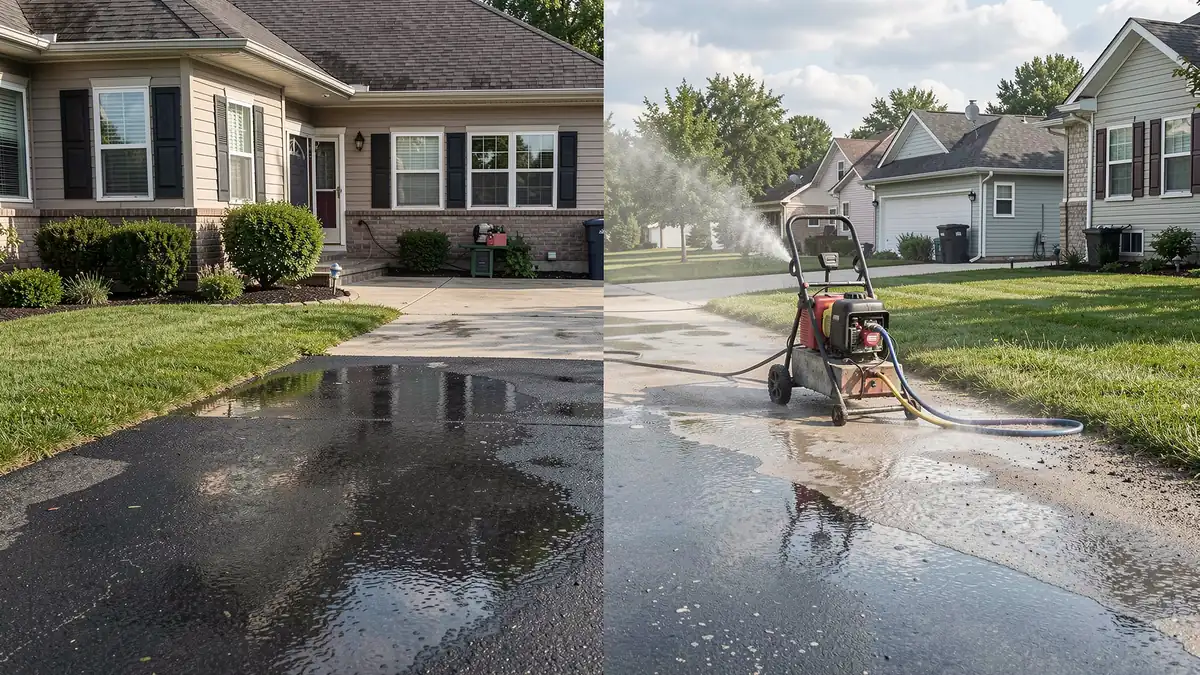
Pressure washing prices in Seattle: the ranges
The national benchmarks this site uses are $120–$260 for a driveway, $250–$600 for a house wash and $150–$350 for a deck. Seattle sits in the high cost band, so those figures typically shift up 15–25 percent. Growth is the pricing wildcard here: a clean-looking driveway often carries an algae film slick enough to walk carefully on, and moss-settled joints, fence lines and shaded patios add hand-detailing and treatment time that plain square-foot math misses. Every number below is a hedged range for planning, not a surveyed price.
| Job | Typical Seattle range (2026) | Notes |
|---|---|---|
| Driveway (600–1,000 sq ft) | $140–$325 | Algae film and mossed joints; pretreatment included |
| House wash (1,500–2,500 sq ft siding) | $290–$750 | Soft wash; north walls carry algae after the wet season |
| Driveway + house bundle | $400–$940 | Best per-hour value; same stop, same setup |
| Wood deck (200–400 sq ft) | $175–$440 | Lower PSI; moss between boards, treatment rinse |
| Patio / pavers + poly sand | $230–$560 | Shaded patios grow green fast; sanding sells well |
| Fence (linear ft) | $1.75–$4.40 / ft | Both sides priced separately |
Inside the metro, North Seattle — Ballard, Greenwood, Phinney — runs older bungalows and craftsman houses with mature tree cover, the fastest moss in the market and quotes at the top of every band. West Seattle and the southern neighborhoods mix mid-century ramblers with newer infill, pricing mid-band on density and good route clustering. The Eastside — Bellevue, Kirkland, Redmond — carries bigger driveways, newer fiber-cement siding and two-story washes that quote high on square footage and wash fast, which is why Eastside route work often nets better per hour than the city proper.
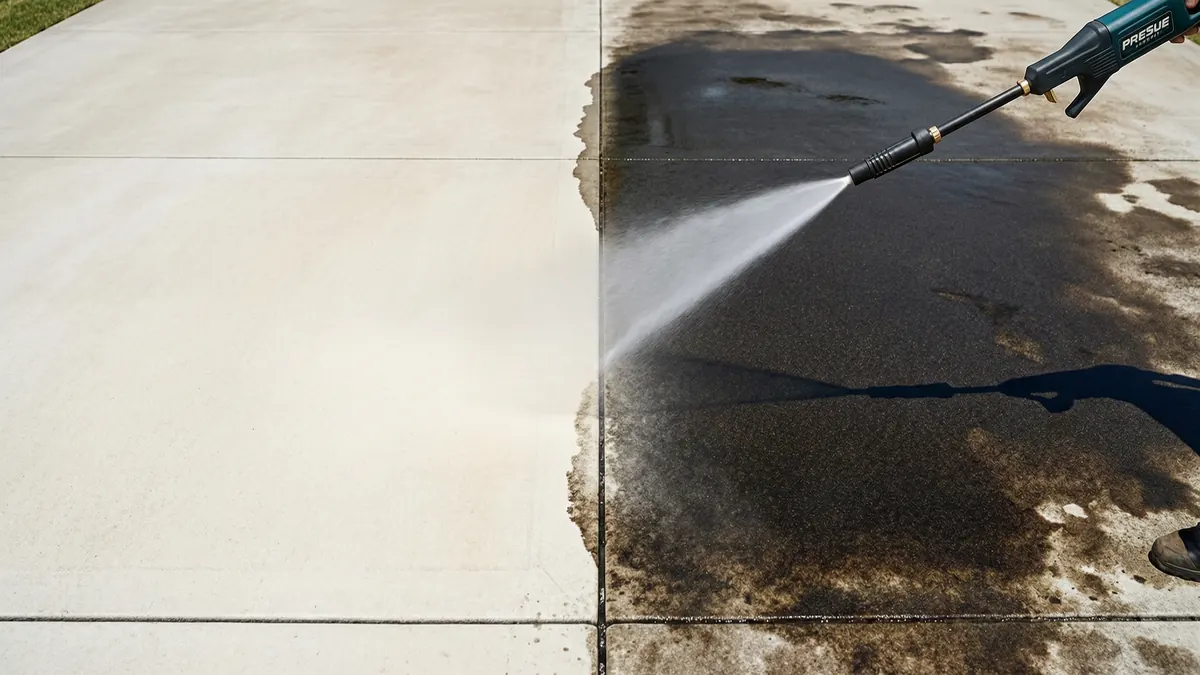
What moves prices in Seattle
Climate, moss and algae. The wet season runs roughly October through May, and everything that stays damp through it grows: moss in deck-board gaps and paver joints, algae slicks on shaded concrete, mildew on north-facing walls. The pricing consequence is that a Seattle wash is rarely just a rinse — competent crews pretreat, rinse and often apply a treatment to slow regrowth, and that chemistry and dwell time is priced into every serious quote. A property here typically benefits from a wash every one to two years, with heavily shaded lots on the annual end and decks sometimes more often.
Housing stock and surfaces. Seattle mixes pre-war craftsman and bungalow siding with mid-century ramblers and decades of newer builds, and the region's signature materials — cedar siding, cedar fencing, wood decking — are all soft, all weather-checking and all unforgiving to high pressure. Cedar fuzzes under an aggressive wand and turns a wash into a sanding job, so soft wash with a treatment rinse is the professional default. Concrete of a certain age shows moss-settled joints and efflorescence from months of rain; lower pressure and more chemistry do the lifting. A test patch on weathered cedar is a 30-second insurance policy against a four-figure repair.
Season, labor and route math. The 15–25 percent premium over national benchmarks is mostly overhead — big-metro wages, Washington workers' compensation costs, fuel and bridges that turn a 10-mile cross-town move into an unpaid hour. What Seattle gives back is a nearly year-round season: no freeze-thaw shutdown, and dry July-through-September weeks when demand peaks because everything finally dries out enough to see the grime. Smart operators book house washes and decks into the dry stretch and keep driveway-and-flatwork work flowing through the shoulder months when the rain returns.
Water rules and runoff. What runs off a Seattle wash heads for Puget Sound, and the rules treat it that way: wash water carrying soap, chemicals or sediment is not allowed to enter the storm drain system, and crews are expected to capture or divert it — typically to landscaping or a sanitary connection. The Washington Department of Ecology has cited Seattle-area operations over exactly this. Verify current expectations with Seattle Public Utilities before large jobs, and treat a provider's answer about wash-water capture as the fastest credibility test there is.
Questions worth asking any Seattle provider:
- Soft wash or pressure on cedar? Cedar siding, fencing and decking should never see a close-range wand.
- Is a treatment rinse included? Killing what the rain regrows slows the next green film — get it on the quote.
- How do you handle wash water? Capture or diversion away from storm drains is the professional answer.
- Can you take the deck with the driveway? Bundling is where the per-hour math turns in your favor.
Stack these bands against the other 24 metros on the pressure washing prices by city hub, turn any surface into a defensible number with the pressure washing calculator, and compare the other half of the property budget on the lawn care prices in Seattle page. The local band sets the market; the math keeps you honest inside it.
FAQ
How much does pressure washing cost in Seattle?
Seattle typically runs 15–25 percent above national benchmarks: roughly $140–$325 for a 600–1,000 sq ft driveway, $290–$750 for a full house soft wash, and $175–$440 for a wood deck. Pacific Northwest labor costs and moss-treatment time set the floor.
How much does it cost to pressure wash a driveway in Seattle?
Typically $140–$325 for 600–1,000 sq ft of concrete. Shaded slabs grow a slick algae film through the wet season, so quotes usually include pretreatment, and heavily mossed joints and edges add hand-detailing time that pushes the price toward the top of the band.
How much does a house wash cost in Seattle?
Roughly $290–$750 for 1,500–2,500 sq ft of siding, soft wash with chemicals included. North- and shaded-side walls carry algae and grime from months of rain, and cedar or fiber-cement siding wants low pressure with a treatment rinse rather than a blast.
How often should a house be washed in Seattle?
Typically every one to two years, with shaded lots on the annual end. Damp air through the wet season grows algae and mildew on north-facing walls faster than drier metros, and decks and walkways in heavy shade may need attention more often than the house itself.
Can pressure washing runoff go down Seattle storm drains?
No. Wash water carrying soap, chemicals or sediment is not allowed to enter the storm drain system — it drains untreated toward Puget Sound and local waterways. Professional crews capture or divert wash water; verify current best-management expectations with Seattle Public Utilities before large jobs.