Pressure Washing Prices in St. Louis (2026)
St. Louis pressure washing prices typically run below national benchmarks — the metro sits in the below-average cost band. A 600–1,000 sq ft driveway most often quotes $100–$225, a full house soft wash runs roughly $210–$525, and wood decks land near $125–$300. The market earns its character from brick and weather: a century-old housing stock whose soft mortar punishes anyone who blasts it, humid river-valley summers that green every shaded wall with mildew, a hail corridor that sends roof-replacement granules streaking down siding, and freeze-thaw winters that crack the concrete underneath it all.
By the MowMath editorial team · Updated $1
Key numbers at a glance
| Job | Typical St. Louis range (2026) | Notes |
|---|---|---|
| Driveway (600–1,000 sq ft) | $100–$225 | Spring salt-film removal is the anchor job; check freeze-thaw cracks |
| House wash (1,500–2,500 sq ft siding) | $210–$525 | Soft wash; old brick and mortar demand low pressure |
| Driveway + house bundle | $300–$650 | Best per-hour value; same stop, same setup |
| Wood deck (200–400 sq ft) | $125–$300 | Lower PSI; humid summers grey and green decks fast |
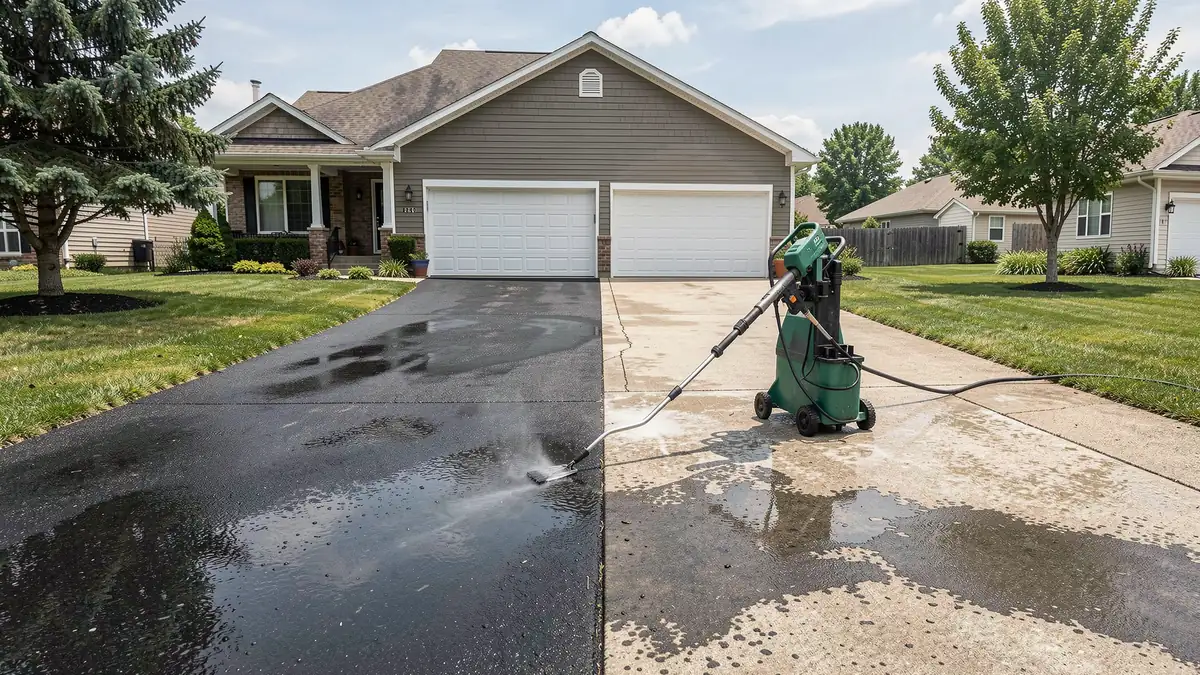
Pressure washing prices in St. Louis: the ranges
The national benchmarks this site uses are $120–$260 for a driveway, $250–$600 for a house wash and $150–$350 for a deck, and St. Louis sits in the below-average cost band — so local numbers typically land roughly 10–15% under those figures, with surface age deciding where inside each range a quote falls. A vinyl ranch in St. Charles with dusty siding washes fast; the same job on a Soulard or Tower Grove brick home means soft wash chemistry, gentle pressure on century-old mortar and attention to limestone foundations, and a driveway that went through a Missouri winter wants salt-film pretreatment before anything else happens. Every number below is a hedged range for planning, not a surveyed price.
| Job | Typical St. Louis range (2026) | Notes |
|---|---|---|
| Driveway (600–1,000 sq ft) | $100–$225 | Spring salt-film removal is the anchor job; check freeze-thaw cracks |
| House wash (1,500–2,500 sq ft siding) | $210–$525 | Soft wash; old brick and mortar demand low pressure |
| Driveway + house bundle | $300–$650 | Best per-hour value; same stop, same setup |
| Wood deck (200–400 sq ft) | $125–$300 | Lower PSI; humid summers grey and green decks fast |
| Patio / pavers + poly sand | $175–$400 | Sanding matters — freeze-thaw works joints loose |
| Fence (linear ft) | $1.25–$3.00 / ft | Both sides priced separately |
Inside the metro, the pattern splits city against county. The City of St. Louis — Soulard, Tower Grove, Shaw, Dutchtown — carries one of the country's great stocks of late-1800s and early-1900s brick, where soft wash, test patches and mortar care are routine and jobs quote mid-to-high despite the below-average band. The inner ring — University City, Richmond Heights, Maplewood — mixes prewar and postwar homes under mature tree canopy that feeds mildew. The outer counties — St. Charles, Chesterfield, O'Fallon, Wildwood, and the Illinois side — run vinyl and fiber-cement subdivisions with wide driveways that clean quickly and price toward the middle, often through HOA accounts. Surface, shade and era, more than geography, decide the number.
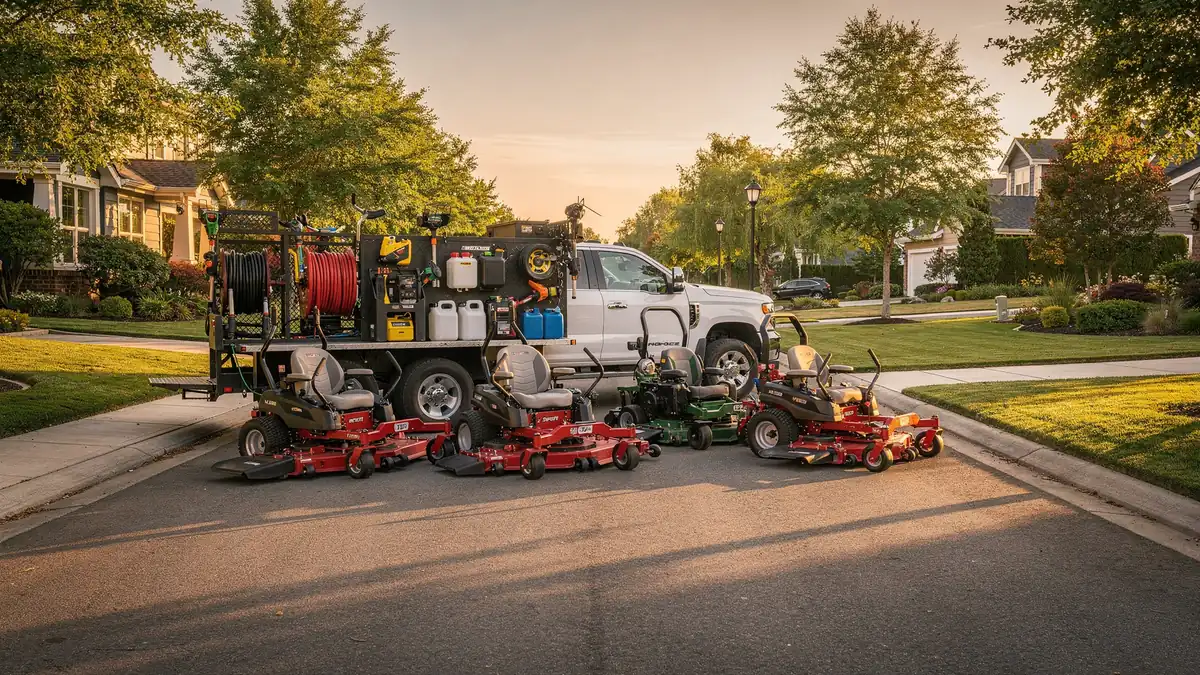
What moves prices in St. Louis
Climate, humidity and mildew. St. Louis sits at the humid edge of the Midwest, where Mississippi and Missouri river air makes summers muggy — and mugginess is what mildew and algae need. The city's mature shade trees hold moisture against north-facing and rear elevations, so siding grows a green-black film through summer that treatment chemistry, not pressure, removes and suppresses. Spring delivers the season's first big wave: winter road salt leaves a white hazy film on driveways and walks that rain never fully clears, and the desalting wash is pretreatment work, not rinse-only. Most homes benefit from a wash roughly once a year — spring for salt, late summer where shade growth is the complaint — and the outdoor season runs roughly April through October before freeze-up compresses the calendar.
Brick, housing age and lead-era paint. St. Louis is one of the most brick-heavy cities in America, and much of it is a century old. Old mortar is soft: high pressure etches brick faces and cuts joints, so reputable crews soft wash with chemistry and drop pressure near limestone foundations and lintels, and test patches on aged masonry are standard practice that prices reflect. Pre-1978 homes — a large share of the city's stock — may carry lead-based paint, and disturbing flaking paint is regulated territory, so verify current requirements with the U.S. EPA's lead program before quoting those jobs. The concrete story runs alongside: decades of freeze-thaw have cracked and offset slabs across the metro, so careful crews drop pressure on damaged sections rather than blast out joint sand, and polymeric sanding after a paver wash matters more here than in warm climates.
Hail, storms and seasonality. St. Louis sits in one of the country's most active hail corridors, and hail years write the schedule: roof replacements drop shingle granules, dust and streaks onto siding and driveways, and post-roof washes cluster into waves that book good crews for weeks. Add severe thunderstorms and the occasional tornado outbreak that coats everything in debris, and storm-recovery work becomes a reliable second season. The steady cycle is a spring salt-removal wash, a mid-summer refresh where shade is heavy, and a fall cleanup wash ahead of leaf drop. Book the April–May desalting window three to four weeks out; June and September schedule faster and often price in the lower half of the band.
Local cost drivers and water rules. Labor and operating costs run below coastal-metro levels, which is why the benchmarks discount. On water: the region draws abundant supply from the Missouri and Mississippi rivers, so drought-style outdoor watering restrictions are rare — the constraint is runoff, not supply. The Metropolitan St. Louis Sewer District manages stormwater and wastewater under its long-running MSD Project Clear program, and the expectation is that wash water stays out of storm drains that discharge to area streams and rivers. Stormwater and water-quality rules sit with the state as well — verify current discharge expectations with the Missouri Department of Natural Resources before scheduling recurring commercial or fleet work.
Questions worth asking any St. Louis provider:
- How do you wash old brick? Soft-wash chemistry and low pressure — blasting etches faces and cuts soft century-old mortar.
- Do you treat the mildew or just rinse it? Chemistry kills growth and slows regrowth; water alone postpones it through the next humid July.
- How do you handle cracked or salt-filmed concrete? Pretreat the film, drop pressure on cracks, and offer sealing — not full blast across the slab.
- Can you bundle driveway, house and fence? Bundles are the best per-hour value in every market, and a short season makes them count double.
Stack these bands against the other 24 metros on the pressure washing prices by city hub, turn any surface into a defensible number with the pressure washing calculator, and compare the other half of the property budget on the lawn care prices in St. Louis page. The local band sets the market; the math keeps you honest inside it.

FAQ
How much does pressure washing cost in St. Louis?
St. Louis typically runs about 10–15% below national benchmarks because the metro sits in the below-average cost band: roughly $100–$225 for a 600–1,000 sq ft driveway, $210–$525 for a full house soft wash, and $125–$300 for a wood deck. Historic brick, humid-summer mildew and hail-season granule streaks move quotes toward the top of the band.
How much does it cost to pressure wash a driveway in St. Louis?
Typically $100–$225 for 600–1,000 sq ft of concrete. Winter road salt leaves a hazy film each spring, and freeze-thaw cycles crack and offset slabs — careful crews drop pressure on cracked sections rather than blast out joint material and widen faults.
How much does a house wash cost in St. Louis?
Roughly $210–$525 for 1,500–2,500 sq ft of siding, soft wash with chemicals included. St. Louis's famous brick and aging mortar demand low pressure and treatment chemistry, and pre-1978 homes may carry lead-based paint that calls for EPA lead-safe practices.
Why does St. Louis brick affect pressure washing prices?
Much of the city's housing stock is century-old brick, and old mortar is soft — high pressure etches both brick faces and joints. Reputable crews soft wash with chemistry rather than blast, which takes more time and product than a rinse, and test patches on aged masonry are standard practice that prices reflect.
Do St. Louis water or stormwater rules affect pressure washing?
Rarely as restrictions — the region draws abundant water from the Missouri and Mississippi rivers, so outdoor watering bans are uncommon. The real constraint is runoff: the Metropolitan St. Louis Sewer District manages stormwater under its Project Clear program, and wash water is expected to stay out of storm drains. Verify current expectations with MSD Project Clear and the Missouri Department of Natural Resources.