Snow Removal Pricing: How Much to Charge (2026)
Snow is the only revenue most lawn operators see between December and March, and it prices differently from everything else on the calendar: the customer is buying certainty, not man-hours. Residential driveways run $50–$150 per push across the U.S., seasonal contracts run $300–$900, and the profit is decided by how you structure the deal — not by how fast the blade moves. Here is what to charge, per inch and per season, and how to defend every number.
By the MowMath editorial team · Updated $1
Key numbers at a glance
| Job type | Typical U.S. price | Notes |
|---|---|---|
| Residential driveway, 1–2 cars, under 100 ft | $50–$75 per push | Truck plow or blower; 15–20 minutes door to door |
| Residential driveway, long or wide (100 ft+, gravel, turnarounds) | $75–$150 per push | Length, surface and turnaround move the number up |
| Seasonal residential contract | $300–$900 | Fixed price, unlimited pushes above the trigger depth |
| Sidewalk add-on | $15–$40 per service | By length; shovel or blower work on the same stop |
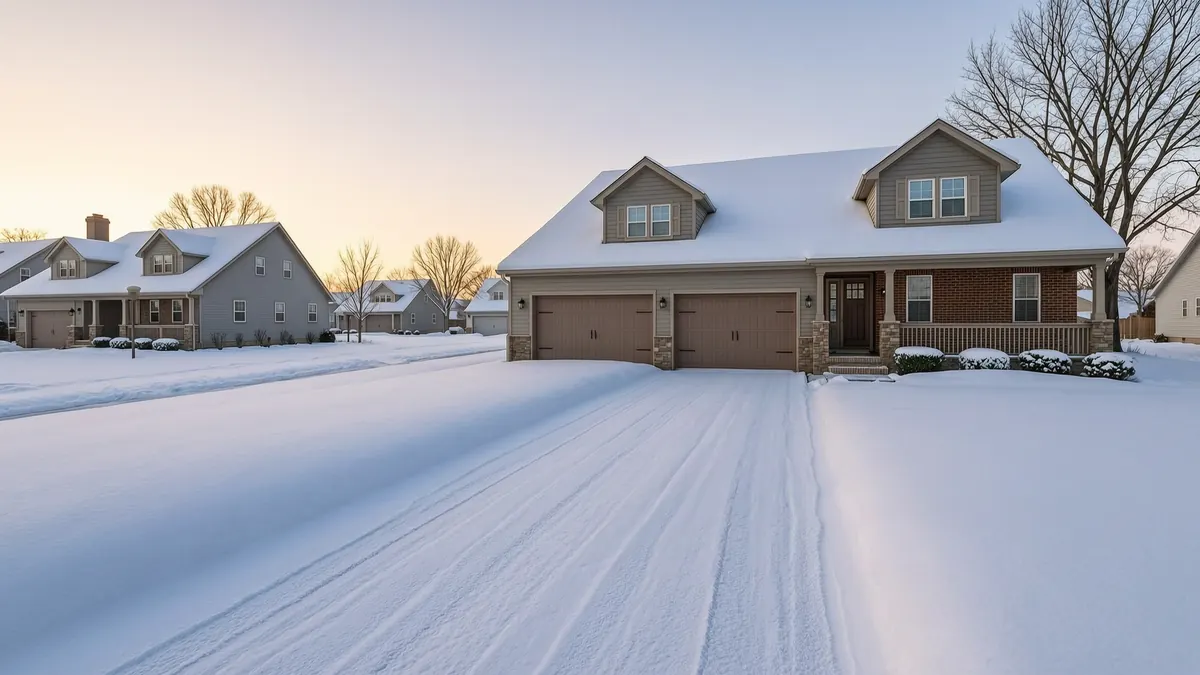
A single residential push typically runs $50–$150, set almost entirely by driveway size and length. A short single-car pad in a dense neighborhood is a $50–$75 stop for a truck plow — fifteen minutes door to door. A long rural drive of 150 feet or more, gravel, with a turnaround at the house, is $100–$150 because it eats the same storm window that three town drives would. Set a trigger depth, usually 2 inches, below which nothing happens and nothing is owed, and hold a minimum charge of $50 or more: any stop under the minimum still burns fuel, windshield time and insurance, and the minimum is what keeps it a business instead of a favor.
Commercial work prices on two structures: per push on the lot, and seasonal or roster deals where a list of businesses pays a retainer for a guaranteed slot on the route during a storm. The roster trades a lower per-visit rate for callout priority — and in a 4 a.m. blizzard, that certainty is exactly what the client is buying. Snow pricing overall is built per event, per inch, or per season; pick the structure before you quote, because the same driveway under three structures produces three very different winters for you.

How to price snow removal
The standard quote structure, nationwide:
| Job type | Typical U.S. price | Notes |
|---|---|---|
| Residential driveway, 1–2 cars, under 100 ft | $50–$75 per push | Truck plow or blower; 15–20 minutes door to door |
| Residential driveway, long or wide (100 ft+, gravel, turnarounds) | $75–$150 per push | Length, surface and turnaround move the number up |
| Seasonal residential contract | $300–$900 | Fixed price, unlimited pushes above the trigger depth |
| Sidewalk add-on | $15–$40 per service | By length; shovel or blower work on the same stop |
| Salt / de-icing application | $25–$75 per application | Salt cost passed through as a materials line |
| Minimum charge | $50+ | No storm stop pays less than the truck it costs |
Per-inch tiered pricing is the cleanest residential structure after the flat push. Publish the schedule in the contract and every deep storm prices itself:
| Snowfall depth | Typical charge | Notes |
|---|---|---|
| Trigger depth to 2 in | Base push price | Usually $50–$75 residential |
| 2–4 in | Base + $10–$25 | One clean pass per surface |
| 4–6 in | Base + $25–$50 | Multiple passes; windrows get real |
| 6 in and up | Base + 50–100 percent | Or hourly with a not-to-exceed cap |
| Drifting / wind events | Hourly, $50–$80 | Drifts refill the drive; quote hourly with a cap |
The tier schedule answers the question every customer asks in a 10-inch storm — why is this one more — before it is asked. It also protects the flat-push customer from being subsidized by the light-winter flat rate, and protects you from working a half-foot event for a 2-inch price.
Contracts vs per-push
The two structures split the same risk down the middle; the only question is who carries the weather:
| Factor | Seasonal contract | Per-push |
|---|---|---|
| Cash flow | $300–$900 collected before the first flake | Income arrives only when it snows |
| Storm risk | You carry it: light winter is a windfall, brutal winter pays the same $300 | Customer carries it: big winter, big invoice |
| Best fit | HOAs, commercials, snowbelt homeowners who want certainty | Residential fill-ins and new accounts proving the route |
| Scheduling | Known route, known nights, roster priority | Unpredictable callouts stacked onto unknown nights |
| Danger | A 90-inch season where push six earns nothing | A January with two storms and a truck payment due |
The honest math: a $500 seasonal contract breaks even around the sixth or seventh push in most snowbelt markets, and every push after that drops your effective hourly rate toward minimum wage. A dead winter inverts it — zero pushes, full payment, best margin of your year. Per-push pays $75–$150 every time the sky cooperates and nothing when it does not. Mature operators run a contract core — the accounts that must be cleared no matter what — and sell per-push on the fringe to absorb storm risk they did not price. Cap seasonal exposure with a push count or a season definition in writing, and price per-inch tiers inside contracts so depth is never free.
Equipment tiers and what each one supports
Price from the equipment you will actually run, not the truck you plan to buy someday. Each tier supports a different price band:
Shovel and ice melt. Near-zero capital, and it fully supports the sidewalk add-on tier at $15–$40 per service. Stairs, walkways, mailboxes and front paths are shovel country, and paired with a melt bucket they are the highest-margin minutes in snow work.
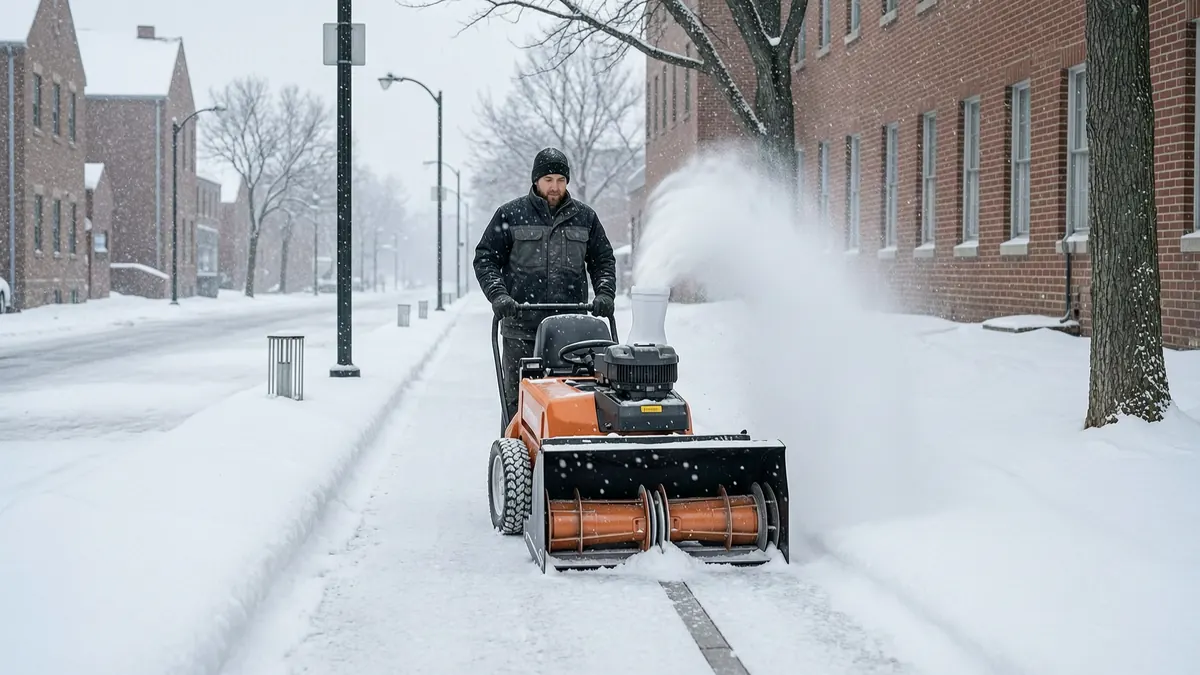
Snow blower ($600–$2,500). A two-stage blower clears residential drives up to two cars wide without a plow on the truck, supporting $50–$100 pushes for an operator starting in snow. It is slower than a blade but cheaper than a plow by an order of magnitude, and it throws snow instead of pushing it into banks you will re-handle in February.
ATV or UTV plow ($1,500–$4,500). The tight-access tier: short drives a truck cannot turn around in, long sidewalks, and condo paths. Speed between stops makes sidewalk routes profitable that would drown a shovel crew.
Truck plow ($3,000–$8,000 installed). The $75–$150 tier and all commercial per-push work. A straight blade on a half-ton clears a 15–20 stop residential route in a storm night, which is the density that makes snow worth running at all.
Selling salt and sidewalks
Salt and de-icing run $25–$75 per application with the salt cost passed through as a materials line — cost plus a small handling margin, quoted per application on the drive and walks, never per pound. Spread takes minutes and the melt does the selling by morning. Sidewalks at $15–$40 are the attach rate to watch: nearly every driveway customer has a walk to the door and a municipal ordinance that says it must be clear, and the add-on rides the same stop at close to pure margin. On commercial accounts, bundle push, walks and salting into one per-event price — the liability story (a slip on an unsalted lot lands on whoever held the contract) closes the salt line faster than any discount ever will.
FAQ
How much should I charge to plow a driveway?
Residential driveways typically run $50–$150 per push, set by size and length. A short single-car pad is a $50–$75 stop; long or wide drives run $100–$150. Hold a $50 minimum so no storm stop pays less than the truck, fuel and risk it costs.
How does per-inch tiered snow pricing work?
Set a trigger depth — usually 2 inches — at your base push price, then add tiers as depth stacks: $10–$25 for 2–4 inches, $25–$50 for 4–6 inches, and 50–100 percent over base or hourly for 6 inches and up. Publishing the schedule up front keeps deep storms from becoming arguments.
Should I sell seasonal contracts or charge per push?
Contracts buy cash flow certainty — $300–$900 residential, collected before the first flake — but you carry the storm risk, and a brutal winter means push six earns nothing. Per-push flips the risk to the customer but pays nothing in a dead winter. Most operators run a contract core route with per-push fill-ins.
How much should I charge for salting and de-icing?
Salt and de-icing typically run $25–$75 per application, with the salt itself passed through as a materials line at cost plus a small handling margin. Quote per application on the drive and walks — the spread takes minutes and the melt sells itself by morning.
What equipment do I need to start offering snow removal?
A shovel and ice melt cover sidewalk tiers with almost no capital. A snow blower ($600–$2,500) supports $50–$100 residential pushes without a plow truck. An ATV or UTV plow ($1,500–$4,500) handles tight drives and sidewalk routes, and a truck plow ($3,000–$8,000 installed) carries the $75–$150 tier and commercial lots.
How do commercial snow deals differ from residential?
Commercial work prices per push on the lot or as seasonal and roster deals, where a list of businesses pays a retainer for a guaranteed slot on your route during a storm. The roster trades a lower per-visit rate for callout priority — that certainty is what commercial clients are actually buying.