What Is Walk-behind vs zero-turn? (2026)
Walk-behind vs zero-turn is the core equipment choice in mowing: a 36- to 48-inch walk-behind that fits gates and slopes, or a 52- to 72-inch zero-turn that eats acreage but hates banks. Your mower sets your efficient job size — and your efficient job size quietly sets your route.
By the MowMath editorial team · Updated $1
Key numbers at a glance
| Machine / deck | Best for | Typical productivity | Gates / slopes |
|---|---|---|---|
| Walk-behind, 36 in | Small fenced lawns, gated backs | ~1–1.5 acres/hr | Fits 40-in gates; handles moderate slopes |
| Walk-behind, 48 in | Small-to-mid lawns, tight trim work | ~1.5–2 acres/hr | Fits 48-in gates only; slopes OK |
| Zero-turn, 52 in | Suburban 10k–20k sq ft lots | ~2.5–3 acres/hr | No narrow gates; gentle terrain |
| Zero-turn, 60 in | Half-acre-plus, open HOAs | ~3–4 acres/hr | No gates; slopes beyond ~15 degrees off-limits |
Ask an operator what they charge and you learn their price list; ask what they mow with and you learn their business model. The walk-behind-versus-zero-turn decision is usually framed as a gear conversation, but it is really a pricing and routing decision wearing a dealer invoice: deck width determines minutes per lawn, minutes per lawn determine the per-visit price floor, and the lawns you can serve efficiently determine which neighborhoods your route can densify. This page defines both machine classes, compares them on gates, slopes and speed with real numbers, and connects the choice back to your hourly floor. Price the lawns either machine serves with the mowing price calculator.
What Walk-behind vs zero-turn means
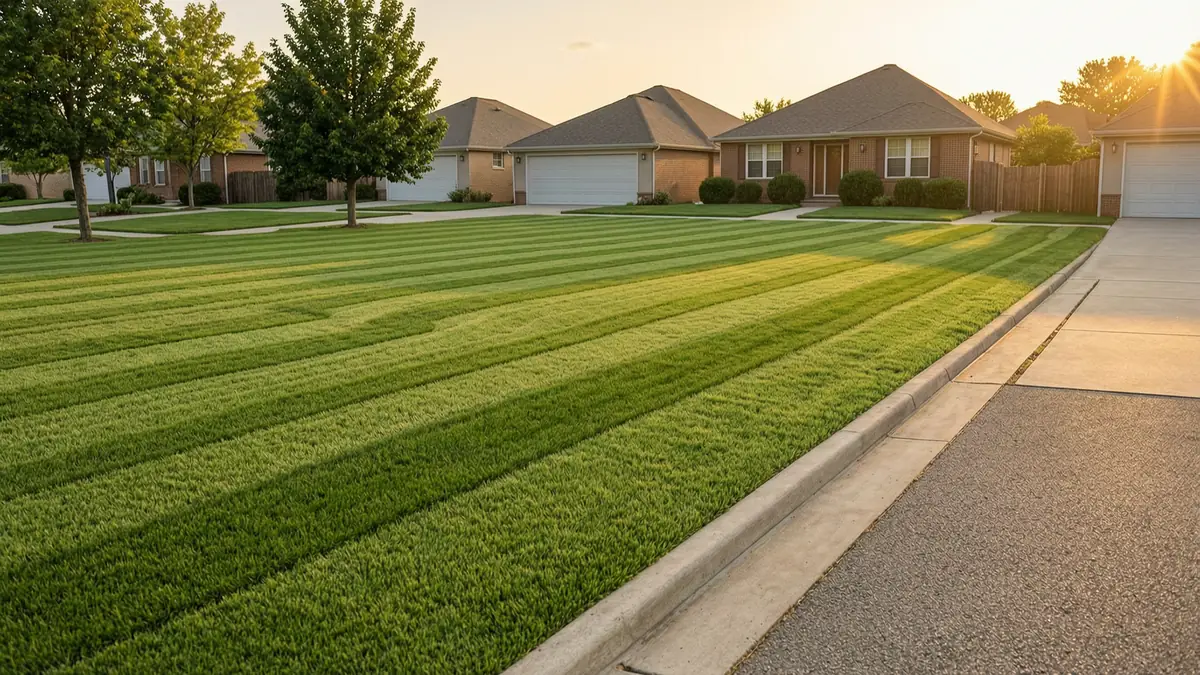
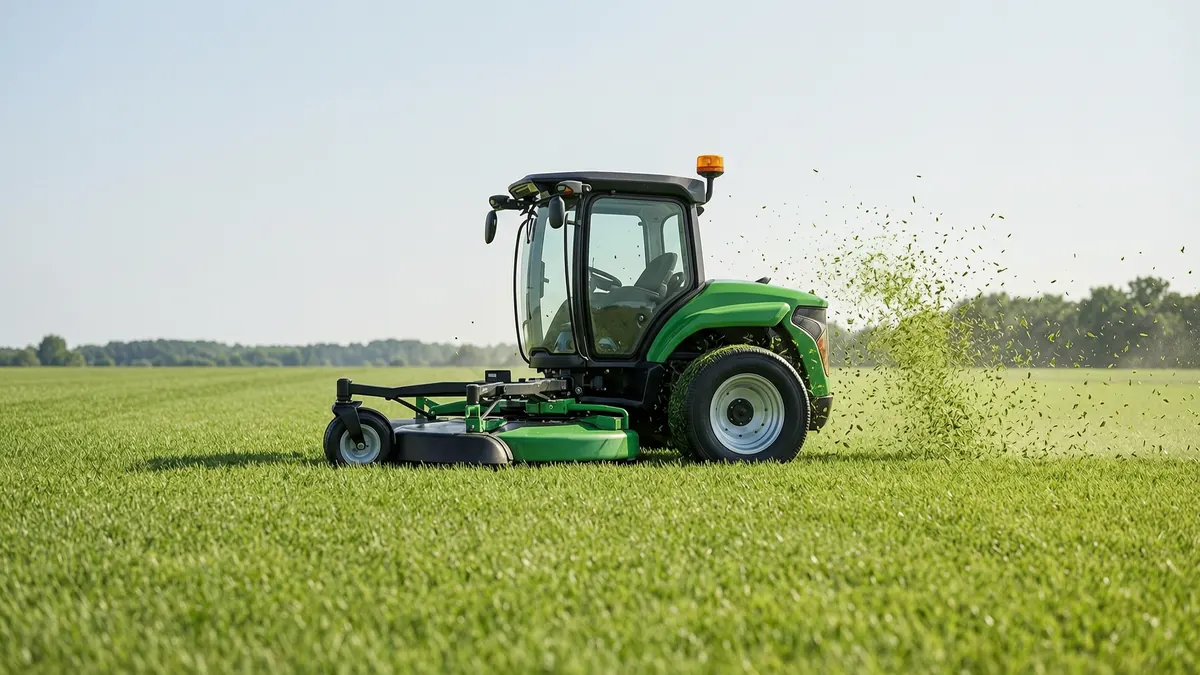
A walk-behind is a commercial mower on 36- to 48-inch decks that you walk behind or, with a sulky, stand on — highly maneuverable, narrow enough for residential gates, and stable enough to handle slopes a rider cannot. A zero-turn is a sit-down rider on 52- to 72-inch decks with dual hydrostatic levers, a zero-degree turning radius and hauling speed built for open ground: it mows twice the grass per hour and cannot safely touch a steep bank or squeeze a 40-inch fence gate. The two machines are not competitors so much as specialists, which is why serious suburban routes carry both and dispatch them per property: zero-turn the front, walk-behind the fenced back, trimmer the edges neither can reach.
The definitional detail that decides more quotes than any spec sheet: residential fence gates commonly run 36 to 48 inches wide (measure before promising a backyard). A 36-inch walk-behind passes; a 52-inch zero-turn does not even try. On such properties the "zero" in zero-turn is theoretical — the machine that actually cuts the backyard is the walk-behind or the string trimmer, and the price must be built on the machine the lawn requires, not the one you own. That is also why hiring help is priced into this choice: the Bureau of Labor Statistics puts the median grounds maintenance wage at $19.27 an hour (May 2025, per BLS occupational data), and a $19-an-hour employee pushing your $4,000 walk-behind can be more profitable per hour than you pushing it yourself at your floor rate.
How Walk-behind vs zero-turn affects your numbers
Speed on open ground, stated honestly: manufacturer specs and field experience typically put a 48-inch walk-behind around 1.5–2 acres per hour at working pace, and a 60-inch zero-turn around 3–4 acres per hour — roughly double. Specs vary with grass, slope and operator, so verify against your own stopwatch after ten jobs; the numbers below use the conservative end.
| Machine / deck | Best for | Typical productivity | Gates / slopes |
|---|---|---|---|
| Walk-behind, 36 in | Small fenced lawns, gated backs | ~1–1.5 acres/hr | Fits 40-in gates; handles moderate slopes |
| Walk-behind, 48 in | Small-to-mid lawns, tight trim work | ~1.5–2 acres/hr | Fits 48-in gates only; slopes OK |
| Zero-turn, 52 in | Suburban 10k–20k sq ft lots | ~2.5–3 acres/hr | No narrow gates; gentle terrain |
| Zero-turn, 60 in | Half-acre-plus, open HOAs | ~3–4 acres/hr | No gates; slopes beyond ~15 degrees off-limits |
| Zero-turn, 72 in | Acreage, municipal and estate work | 4+ acres/hr | Open ground only — route-defining machine |
Worked example, the same 20,000-square-foot open lot mowed with two machines. The 60-inch zero-turn finishes in roughly 20 minutes; the 36-inch walk-behind takes roughly 45. The 25-minute difference at a $70 hourly floor is about $29 of cost per visit — and per-visit pricing means the quoted price is identical whichever machine rolls off the trailer, so the faster mower converts directly into yield: the same $95 quote is $285 an hour of on-site time on the rider versus about $127 on the walk-behind. Across one weekly customer that is $754 a season (26 visits × $29); across a route of eight such lots, roughly $6,000 a season — which is how a $8,000–$12,000 commercial zero-turn pays for itself in year one and why the purchase test is always minutes saved × visits × customers, checked against your floor from the hourly rate calculator. The choice also routes you: a 72-inch deck demands an open-property customer base, while a 36-inch walk-behind opens every fenced subdivision in town — the machine literally selects the route density you can build.
Common mistakes with mower choice
Buying acreage iron for a fence-gate market.The 72-inch deck is magnificent on the properties it fits and a trailer ornament on the ones it does not. Match the deck to the book of customers you have, not the one you imagine.
Riding slopes. Zero-turns tip where walk-behinds crawl. Slopes beyond roughly 15 degrees are walk-behind or trimmer territory, and those properties should carry a difficulty modifier of 1.3x or more precisely because the efficient machine cannot be used on them.
Promising backyards sight unseen. The 40-inch gate discovered on arrival turns a 25-minute visit into a 50-minute trimmer workout. Measure gates at the estimate — it is a two-second question that protects the price.
One mower, no backup. A down machine is a down route. Solo operators running a single mower should hold a cheap used walk-behind as insurance; the $1,500 beater that saves one week of cancellations has paid for itself.
When the choice matters most
It matters most at the start, when the first commercial mower purchase defines which customers you can profitably serve; at growth, when the second machine should fill the gap the first leaves (gates or acreage, whichever your book lacks); and at pricing, where minutes per lawn are the raw material of the per-visit number — see per-visit pricing for how flat quotes convert saved minutes into yield. It matters for crew economics too: at a $19.27 median employee wage, the question of who pushes which deck is a billable-hour arithmetic problem, not a preference. For the full pricing system this feeds, read the 2026 pricing guide and start from the MowMath home page.
FAQ
What does walk-behind vs zero-turn mean in lawn care?
The core equipment decision: a 36- to 48-inch walk-behind you push or ride behind, versus a 52- to 72-inch zero-turn rider. The walk-behind fits narrow gates, small lawns and slopes; the zero-turn eats open acreage but hates steep ground. Your mower sets your efficient job size, and your efficient job size sets your route.
Which mower fits through a backyard fence gate?
Usually the walk-behind. Residential gates commonly run 36 to 48 inches wide — measure before promising anything — so a 36- or 48-inch walk-behind is the machine that reaches fenced backyards while most zero-turn decks cannot enter at all. That one fact is why many suburban routes carry both.
How much faster is a zero-turn than a walk-behind?
Roughly twice on open ground: a 48-inch walk-behind typically covers 1.5–2 acres per hour, a 60-inch zero-turn 3–4. Specs vary, so time your own jobs — but on a 20,000-square-foot open lot the difference is roughly 25 minutes of on-site time, about $29 at a $70 hourly floor.
Can a zero-turn mow slopes safely?
Not steep ones. High center of gravity and castor front wheels with no traction put most riders at their limit beyond roughly 15 degrees; the safe tools on banks are a walk-behind or trimmer. Never ride a slope you would not feel safe turning on — slope-heavy properties carry a difficulty modifier of 1.3x or more for exactly this reason.
Which mower should a new lawn care business buy first?
Match the machine to the route you have, not the one you imagine. Small fenced suburban lawns: a 36- or 48-inch walk-behind plus a trimmer covers most of the work. Open half-acre-plus properties: the zero-turn earns its price fast. Buying the big iron first and hunting acreage to feed it is how operators end up underpricing to stay busy.
How does mower choice affect pricing?
Minutes per lawn set the per-visit price floor, and deck size sets minutes. The faster machine on the right terrain converts drive-and-mow hours into billable hours at the same quoted price — on a 20,000-square-foot lot, the same $95 quote yields about $285 an hour on a 60-inch rider versus roughly $127 on a 36-inch walk-behind. Test every equipment purchase that way: minutes saved × visits × customers.